
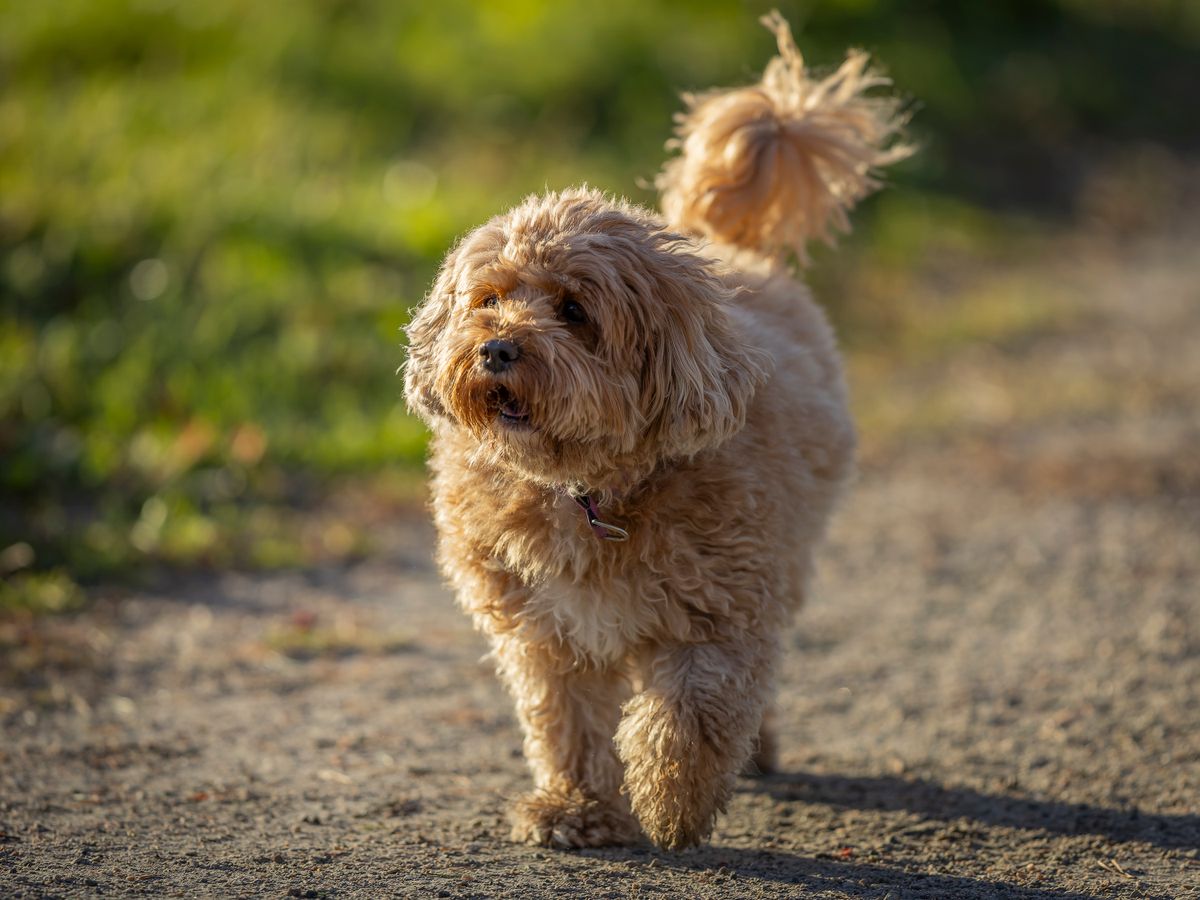
Teach a toilet cue on the lead first, then change the surface gradually: a square of turf on the concrete driveway, halved after a few days, then bare concrete beside it, then no turf at all. Two weeks before the flight the garden closes, and every wee is on the lead, on concrete, on the cue. And stop the marking on walks now, because a dog that signs every post has forgotten how to empty its bladder, and that's the dog that holds for three days in the new apartment and then goes on the rug.
I've just done this with a Cavoodle moving from a Melbourne garden to New York, where "curb your dog" is the law and the culture. Here's the method and the part nobody expects.
Why a grass dog holds
A dog that has only ever weed on a lawn has learned that the toilet is grass. Not "outside", grass. Put that dog on a concrete kerb in a city that smells of a thousand other dogs and it will hold. And hold. Then it goes on the apartment floor at 3am on night two, and now you have a toilet-training problem in a place with no garden, in the same week as everything else changing. The fix is boring and it starts weeks before you leave: the new arrangement, rehearsed in the old place while you still have the lawn to fall back on.
Step one: the cue
Lead on, walk to the spot, say the word, wait. Don't talk, don't pace, don't tour the garden. When the dog goes, mark it with one word and the outing is over. Two minutes is the window. Nothing in two minutes, back inside, try again in half an hour. You're teaching the dog that the lead and the word mean business, not that the lead means a sniffing expedition. Do this on the current surface for a week before you change anything else.
Step two: the surface
Put a square of turf on the concrete driveway and cue there. Same smell, new ground underneath. After a few days, halve it. Then cue on the bare concrete beside it. Then the turf is gone. By the final two weeks the garden is finished: every toilet trip is on the lead, on concrete, on the cue, and grass isn't an option. That's not cruel, that's the new life arriving a fortnight early, in a place where you can still fix it if it goes wrong.
If your dog is moving somewhere else, swap the surface. Snow you can't rehearse, but a set time and a lead you can. A balcony toilet, a fenced yard the dog has to use alone, a wee at 7am because the whole family leaves at eight: whatever the new arrangement is, it starts here, weeks out. That's the whole principle behind preparing a dog for a move: rehearse the landing, not the flight.
The part nobody expects: your dog isn't weeing, it's signing
Watch the next walk and count the wees. Most of what a dog does on a walk isn't toileting. It's a few drops on the pole, a lift at the corner, a kick, walk on, repeat. That's marking, the dog leaving its name on things, not emptying its bladder. In a suburb with nature strips it's an annoying habit. On a city block with a thousand signatures on every post it's unmanageable: the dog hunts for posts the whole way, and it never actually empties. Chronic markers forget how to wee. They leave drops all day, hold the rest, and then can't go when you need them to, like an hour before a fourteen hour flight.
"Wee to empty, not to sign. One full wee at the start, then the walk has a job."
So the rule from now: one full wee at the start of the outing, on the cue, and then the outing is a walk with a purpose, not a sniffing tour. A dog that starts hunting for posts mid walk has left the walk in its head, and you walk on. Sniffing is allowed, in the break, in the place you choose. Marking is almost always a boundaries problem: a dog short on structure has silly energy to spend on signing things, and give it a job on the walk and the signing drops off on its own. You'll notice the side effect inside a week. The wees get big again. That's the dog rediscovering how to empty.
Holding, and the flight
An adult dog holds comfortably overnight, eight to ten hours. Fourteen is longer than any dog holds reliably, so don't try to train it. Feed the last meal about four hours before handover, cue a full wee at the very end, on concrete, put an absorbent liner and the thin blanket it sleeps on in the crate, no fluffy bed and no toys because airlines refuse them, and don't blame anyone for a wet crate at the other end. Train the empty wee at handover, then let it go.
Landed
Day one in the new place: toilet trip at the kerb within an hour of collecting the dog, on the cue, then rest. A dog that won't go on day one is normal. Keep the trips short and fixed, three a day, two minutes each, and it comes. What you don't do is tour the neighbourhood looking for grass, because then you've taught the dog that holding gets it a lawn.