
No. The Australian Veterinary Association's policy is that dogs and cats should not be sedated for air transport, and Qantas Freight doesn't recommend it because a sedated dog can look unwell at the health check and a pet that looks unwell isn't accepted for the flight. The only thing that gets a dog through fourteen hours in a hold calmly is a crate that already means sleep, and that takes six weeks, not a tablet.
I get asked this by almost every relocating owner, usually about a fortnight before the flight, and usually because the crate work hasn't been done. So here's the honest answer, and what to do instead.
Why the vets say no
The AVA's reasons are physical, not philosophical. A sedated dog can't brace itself when the crate is lifted and moved, so it gets hurt. Sedation lowers blood pressure and breathing at cabin altitude, and the hold is pressurised to around 8,000 feet, so a dog that was fine on the ground can collapse in the air where nobody can reach it. Sedated animals can't regulate their temperature properly, they're more prone to dehydration, and if they drink they can breathe the water in. The effects are unpredictable dog to dog, and some come out the other side hyperexcitable. For flat-faced breeds it's worse again: the AVA notes that half the dogs that died in air transport between 2005 and 2010 were brachycephalic.
The airline's reason is simpler. Qantas Freight does a health assessment at the terminal, and a sedated dog looks sleepy and unwell. Sick pets aren't uplifted. So the sedative you gave to help the dog can be the reason the dog doesn't fly.
What about "natural" calming products?
The transport companies suggest pheromone collars and calming wraps as the alternative, and the AVA leaves room for non-sedating anti-nausea and anti-anxiety medication where a vet thinks it's warranted. Ask your vet about a fit-to-fly check, not about calming tablets. But be honest with yourself about what you're buying. A collar doesn't teach a dog that the box is a bedroom. It takes the edge off a dog that's already learned it. If the crate hasn't been trained, nothing you spray on it is going to matter at hour nine.
"You can't correct a dog into calm, you can't say just relax, and you can't medicate a dog into a habit it hasn't got."
What actually works
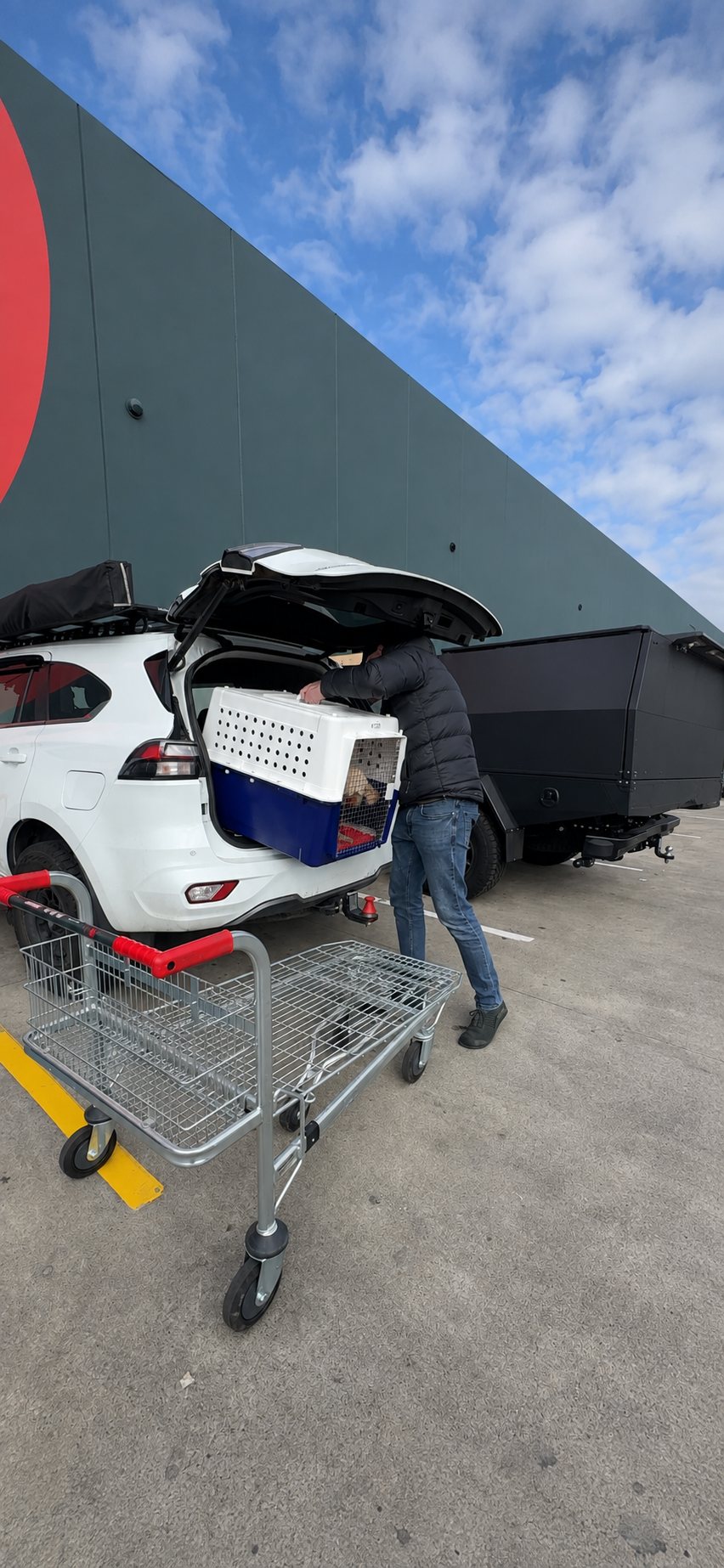
A dog that sleeps in its crate every night, has ridden in it in the car, has been carried in it by a stranger, and has heard the airport through a phone speaker during a rest, sleeps through the flight. A dog that hasn't, doesn't. The crate is a habit, not an event, and the habit takes six to eight weeks to build. The order is: crate in the busiest room, uncovered, meals inside, door closed the night the dog is flat inside on its own, then the crate moves with the dog in it, then the noise. The full version is in how long before a flight to start crate training.
Two things on the day. Feed the last meal about four hours before handover, and cue a full wee at handover so the dog goes into the crate empty. And nobody cries at the crate. Dogs read us far better than we read them, and a family sobbing over the box is the last thing the dog takes into the hold. Put the dog in, walk away, cry in the car.
The dog that genuinely can't cope
Some dogs are too far up the waterline to crate train in the time you have. A dog that panics in any enclosed space, a dog with a bite history around handling, a dog that has never spent a night away from a person. That's not a sedation conversation, it's a training conversation, and it needs hands on a lead and a plan before the flight, not a tablet on the day. If that's your dog and the flight is more than a month out, book a consultation and we'll sort out whether it's fixable in the time you've got.