
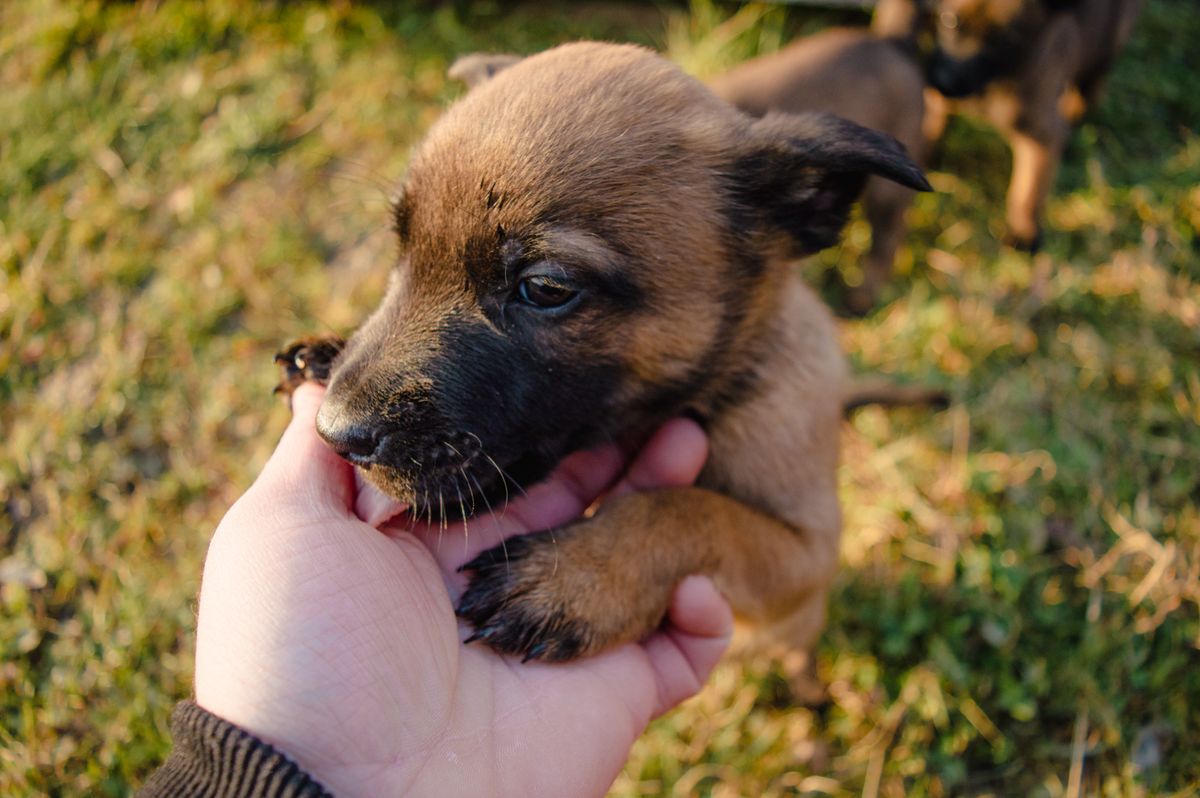
The best therapy dog I can find you is a puppy whose breeder did the work in the first eight weeks, from a breed that recovers fast from surprises, picked at seven weeks for how it settles rather than how it charms. In that order. Most people do it backwards: they pick a breed off a list, find a litter, and choose the puppy that ran up to them first. The puppy that ran up first is the one that will be greeting every client in your waiting room for the next twelve years.
The raising comes first
The first eight weeks are the fastest neurological development your dog will ever go through. What its brain soaks up before you hold it, the surfaces, the sounds, the handling, the small frustrations it was allowed to work through, is the software it runs on for life. You are not choosing a puppy. You are choosing the person who builds the start of your dog. I have written the breeder questions up already, and they all apply here. For a therapy dog I add three.
Ask whether they place puppies into therapy or assistance roles, and how many. A breeder who has done it before knows which puppy in the litter is the one, and will tell you if it is not in this litter. Ask what the parents do. Parents who work as therapy dogs or who live in a house full of children and noise tell you more about temperament than any pedigree. And ask how they match puppies to homes. The answer you want is a temperament assessment around seven weeks and the breeder choosing for you, or with you. The answer you do not want is "first deposit gets first pick".
Breeds that stack the odds
Breed does not decide it. The raising and the individual dog decide it, and I have met Labradors that could not sit in a room and Cairn Terriers doing child play therapy every day. But breed sets the odds, and for this job the odds favour dogs that are people-focused, low in prey drive, forgiving of clumsy handling, and quick to come back down after a startle. That short list is why the same breeds keep turning up.
Labradors and Golden Retrievers, because they were bred to work beside a person all day and wait. The shedding and the size are the trade-off in a small clinic. Cavalier King Charles Spaniels, because they are small, soft, and were bred for exactly one job, sitting on a lap, which is most of what a therapy dog does. Check hearts. Standard Poodles and the oodle crosses, Groodles, Labradoodles, Cavoodles, because the coat suits allergy settings and the retriever side is intact. The catch is the Poodle brain: a bored Poodle invents a job, so the four modes matter more, not less. Bernese Mountain Dogs, calm and heavy and good with children, with a short lifespan and a lot of dog for a small room. Greyhounds, the breed nobody expects: retired racers are quiet, sleep twenty hours a day, and lie flat in a corner for a whole session, and there are thousands of them needing homes. Some have a strong chase drive toward small animals and that needs checking, but in a room full of people they are often the calmest dog present.
Breeds I steer professionals away from: anything bred to guard, anything bred to herd children into a corner, and anything whose whole personality is speed. Not because they cannot do it, but because you are buying odds, and those odds are worse.
The seven-week test
At seven weeks I sit on the floor with the litter and watch for one thing above everything else. Recovery. I drop a bunch of keys. Every good puppy startles, and I do not want the one that does not, because a puppy that never startles at seven weeks is often a puppy that has not noticed yet. I want the one that startles, looks, and is back sniffing the keys within a few seconds. That is a dog that will hear a client shout and be asleep again a minute later.
Then I walk away and see who follows. A therapy dog tracks its person. Then I pick each puppy up, cradle it on its back, hold a paw, look in an ear, and feel for the one that wriggles and then gives. Not the one that goes limp straight away, and not the one that fights the whole time. Then a novel object, an umbrella opened on the floor, and the same read: approach, investigate, move on. And I watch the puppies with each other. The one that starts every game and will not stop is a lot of fun and the wrong dog for a clinic. The one that plays, then goes and lies down by itself, is the dog I want.
Here is the puppy I am looking for, in its own words. Loud noise. Hm. Oh, keys. Where did the person go? There she is. Fine, I'll lie here. That puppy is a therapy dog at seven weeks. The rest is raising.
"You are not choosing the puppy that likes you most. You are choosing the puppy that likes you enough, and then goes to sleep."
If you are not getting a puppy
An adult dog with a known temperament is a perfectly good route, and for a lot of professionals a better one, because you skip the year where the dog is a teenager and you are trying to run a practice. Three places to look.
Seeing Eye Dogs, run by Vision Australia, releases dogs that did not suit guide work. These are Labradors and Golden Retrievers raised from birth for exactly the temperament you want, and the ones released for reasons of confidence or distraction are often ideal for a room. From July 2026 the adoption fee is $4,000 to $5,000 and there is a register to join. Guide Dogs Victoria reclassifies dogs the same way and gives priority to alternative working roles, though at the time of writing they are not taking new expressions of interest. And greyhound adoption, through the Greyhound Adoption Program in Victoria and the rescue groups around it, will match you with a retired racer who has already been assessed around people, children and other animals. Tell them it is for a clinic. They will know which dog.
Whichever route, the dog still does the program. Temperament gets you in the door. The four modes are what let the dog work the room without being told.
Breeders who raise for this work
These are Australian breeders who either place puppies into therapy and assistance roles, or run the early programs that build the dog for it. I have listed what each one says about their own raising, and where I would push for more. This is a directory, not an endorsement of every litter, and a breeder being here does not put a puppy in your hands: they choose their homes, and the good ones say no. Where a breeder is a Good Puppy Blueprint partner it is marked, which means their families start my program before the puppy comes home.
If you are a breeder who belongs on this list, or you are on it and want something changed, email me.
Victoria
Silverleaves Labradoodles
Small-scale, home-raised, run on Puppy Culture and the Badass Breeder program with early neurological stimulation from the first days. Every family starts the Good Puppy Blueprint before pickup, so the foundation carries through the handover.
Ask: which puppy in the current litter they would pick for a clinic, and to see the seven-week assessment.
Palmira Healing Puppies
The whole program was built around one therapy dog, a chocolate Labrador called Darci who worked with trauma survivors, and the idea that her temperament could be reproduced. Every parent has worked or trained as a therapy dog. Neurological stimulation starts at three days, personality testing before placement, and a training option for handlers on request. Puppies have gone to assistance homes and therapy work.
Ask: how many working placements in the last two years, and what happened to the ones that did not suit.
Tanjil Pets
Family breeder since 1995. One of their Groodles, Chilli, goes to work every day as the wellbeing dog at a small rural school, and another is in therapy dog training. Parents DNA, hip and elbow tested. Home visits to the litter from six weeks.
Ask: what the early neurological and sound program looks like, week by week. Their site talks about enrichment more than protocol.
Trinity Groodles
Breeds specifically for calm, confident puppies suited to therapy, assistance and companion roles, with behavioural testing used to match puppies to homes. Breeding stock DNA, hip and elbow tested through Orivet.
Ask: to see the behavioural test they use and how they scored the puppy they are offering you.
Camuka Golden Retrievers
Thirty years with the breed. Their dogs have gone on to therapy, assistance, obedience and tracking work, and one of their sires has produced several puppies selected for Dogs For Kids With Disabilities. One to two litters a year, so the wait is real.
Ask: what the puppies experience in the house before eight weeks. A show-and-working kennel does not always run a structured early program, and this one may.
Kingswear Cavaliers
Second-generation registered breeder on a farm property, with indoor play areas and a stated focus on socialising puppies to people and environments. Genetic screening and DNA tracking for breeding decisions. Their own page lists therapy work as something the breed suits.
Ask: heart certificates on both parents, every time, and whether any of their puppies are working.
Interstate
Super Canine
Run by a GHAD-accredited assistance dog trainer, breeding Goldens for assistance, therapy and companion roles, raised in a family home with a structured puppy foundations program. They also help handlers train their own dog for schools, aged care and hospitals.
Ask: whether a puppy can come to Melbourne on the Good Puppy Blueprint rather than their own foundations program, or alongside it.
Groodles Australia
An occupational therapist is on the leadership team, and it shows in the placements: several puppies working or training as diabetic alert assistance dogs with Paws for Diabetics, plus Story Dogs. Puppies raised in family homes through their Champion Families program, with early neurological stimulation and early scent introduction. Selection favours the steady, people-focused puppy.
Ask: how they transport to Victoria and whether they will pick the puppy for a clinic setting rather than a family.
Great Southern Groodles
Works directly with schools and allied health professionals, and has a separate application path for them. Runs an acclimation program with outside temperament testing to find the puppies suited to the work, and keeps relationships with certification bodies around the country for what comes after.
Ask: whether they place east, and what the temperament test involves.
Valinka Labradors
Both have qualifications and years of work in the disability field, and it shows in how they place. Every litter is bred to be suitable for assistance work: some lines for task work (diabetic alert, seizure alert, guide-type duties), others for emotional support (PTSD, autism, ADHD, anxiety). Puppies are born and raised in the house with everyday noise, a sound desensitisation app and, within vaccination limits, other dogs. No puppy is chosen before eight weeks, once the personalities have shown, and they match on the lineage's personality as much as the individual's. If a puppy turns out not right for the job, they would rather refund you or move you to the next litter than send a borderline puppy to an owner-trainer home.
Ask: which line the litter comes from, task or emotional support, and what the eight-week selection showed for the puppy they are offering you.
Doodle Dogs
Forty years of breeding and training behind it, with roots in police and air force dog work. Early neurological stimulation on every litter, DNA-tested parents, and training started before the puppies leave. They market puppies for support roles directly.
Ask: where the puppies are actually raised. A national brand can mean several properties, and you want to know which one.
Not on the list yet: a Bernese breeder and a Cavoodle breeder in Victoria who raise on a structured early program. If you are one, email me.
Then start before the puppy comes home
Whichever breeder you choose, the fastest learning window of your dog's life happens at their house, not yours. The Good Puppy Blueprint starts at five weeks old, before homecoming, so the breeder weeks get used instead of wasted, and it is the same four modes the dog will run on in your clinic later. $440, nine weeks, two video catch-ups with me, anywhere in the country. Then, once the dog is old enough, the Dog at Work version of the PACE Program takes it into your workplace.