
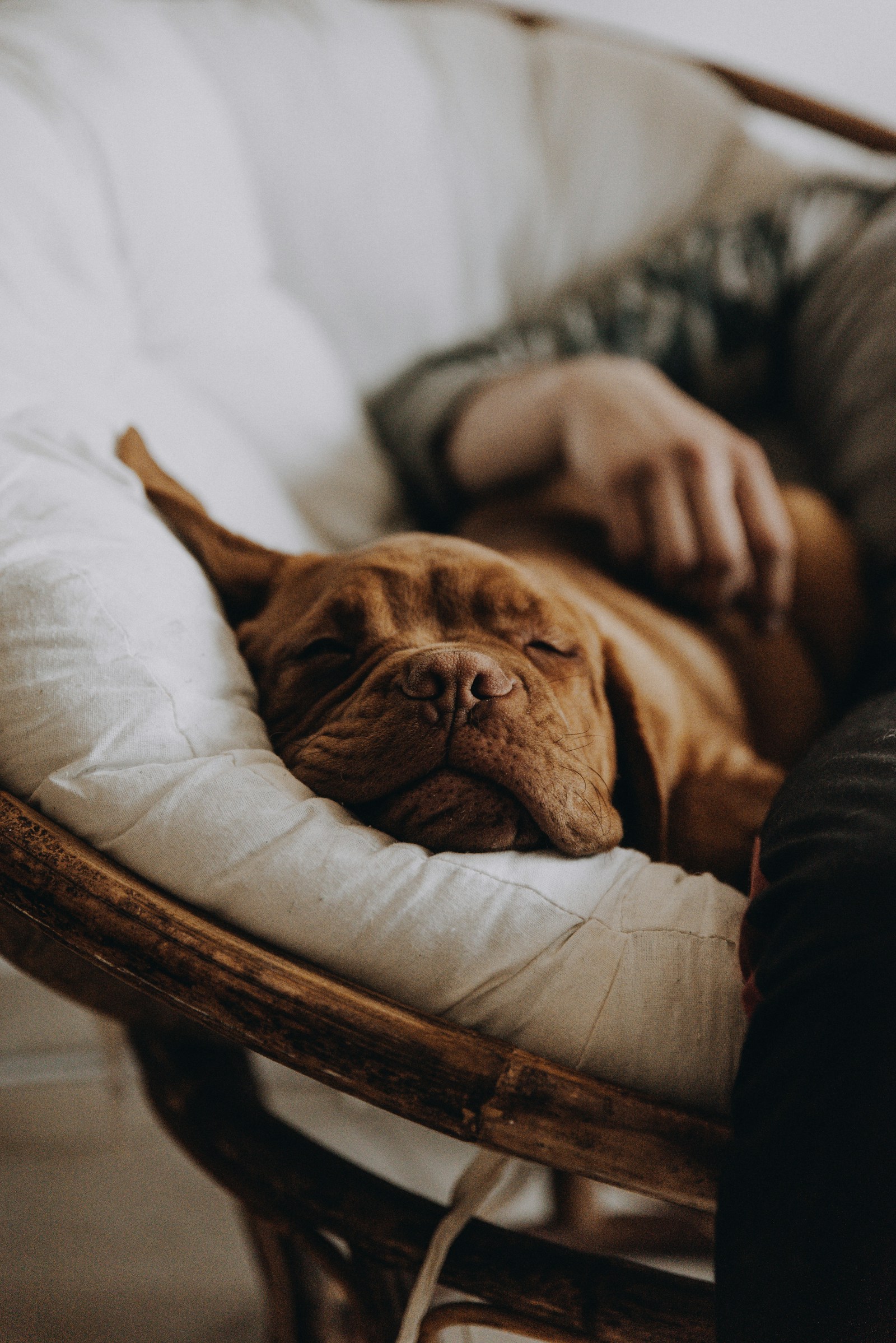
Separation anxiety in a dog is treated the same way as any other trigger, because that is what it is. The trigger could be you leaving the house. Or you coming back. Put it on the waterline next to the postie, the doorbell and the dog across the road, and it stops being mystical. The howling, the scratched door, the wee on the mat, the shredded couch cushion: all of it is a dog whose baseline sits too high, tipping over the top when one more thing happens. The one more thing happens to be you picking up your keys.
That matters because the standard Melbourne advice for separation anxiety is a management project. Desensitise to the keys. Leave for thirty seconds, then a minute, then two, for months. A camera, a calming collar, a food puzzle by the door. Some of that is fine. None of it lowers the level the dog lives at, so the dog is still one bad day from where it started. I would rather fix the week than manage the moment.
Most separation anxiety in Melbourne dogs is FOMO
I run a test at almost every consultation where "separation anxiety" is on the form. The dog is on a tether or held at park. Both owners sprint off in opposite directions, mid session, no warning. The dog whinges for a few seconds, watches, and holds. Nothing changes. "It's no big deal" is the line I say to the owners, and it is the line the dog needs to learn.
What that whinge usually is: you are doing something without me. That is not separation. It is FOMO, and a dog with FOMO is a dog that has never been taught that the household carries on without its involvement. The dog that follows you room to room, sits outside the bathroom door, and cries when the other dog goes for a walk is in the same bucket. It is a boundaries problem, and the fix is CALM: rest on your terms, in a busy room, while life goes on around the dog. Not a crate in a dark laundry, and not a puzzle toy to keep it busy while you sneak out.
Real panic exists. I see it in a few dogs a year, and it looks different: drool, a dog that cannot eat, a body that never comes down even after you return, scratches on the inside of the door that go through the paint. That dog gets the fear protocol, and often a conversation with your vet. But nine out of ten dogs sold to me as separation anxious are FOMO dogs with a high waterline, and treating them for panic makes them worse, because every soft goodbye and every anxious return tells the dog there was something to worry about.
What I look for at the consultation
- What the day looks like. A dog that gets a long walk, then free run of the house, then you leave, has no off switch and no reason to switch off. Where is CALM in the day, and is it on your terms or the dog's?
- Whether the dog rests at all when you are home. A dog that cannot settle while you are in the next room will not settle when you are in the next suburb.
- How you leave and how you come back. Most owners rehearse the anxiety: the ten-minute goodbye, the treat scattered at the door, the arrival that turns into a party. The dog reads all of it.
- Multi-dog homes. Two dogs that have never been apart are two dogs who are each other's regulation. I tether one to each side of the same coffee table so they learn separation in the same room first.
- Health. A dog with a gut upset, in pain, or not sleeping can present as anxious. I ask about food and poo before I ask about the door.
How the program runs for a separation case
Step one is a 90-minute consultation, $400, at your home where the leaving happens. The first half is reading: your dog's body, your day, and the moment you pick up the keys. The second half is hands on. CALM is set up on a tether in the busiest room, with the household carrying on around the dog, and I show you the release, which is the whole lesson. Then we run the leaving: short, unannounced, boring, with nothing at the door and nothing at the return.
If the dog needs more than that, the PACE Program follows: four weekly sessions plus my feedback on your phone videos in between, $1,600 for the four weeks, $2,000 all up with the consultation. Cycles replace walks for the first stretch, because a dog that is learning to switch off cannot afford a daily flood of the street. By week three most of these dogs are asleep when you leave. Not managed. Asleep.
Two rules hold from day one. You do not narrate your departures, and you do not apologise on your return. The dog needs to see that it does not matter when its people leave, and that they come back. The only way to teach that is to leave, calmly, and come back, calmly, a lot.
Newport, Williamstown and the inner west
I am based in Newport and most of my separation work is in the houses of the inner west: the workers' cottages of Yarraville and Seddon where the dog can hear every footstep on the street, the apartments in Docklands and Footscray where the lift and the corridor are the trigger, and the family homes in Williamstown and Altona North with a second dog in the picture. If you are further out, the consultation can run online and the plan is the same.
Sessions run Wednesday to Saturday, in Newport, Docklands and at your home in the inner west
Separation cases are usually home visits, because the front door is the trigger and I want to see it. Newport, Williamstown, Yarraville, Footscray and Seddon are inside my area; the rest of Melbourne carries a call-out fee. Online works well for the reading and the plan, and the filming happens on your phone anyway. Fill in the form and I read it myself. Times go out in the order forms arrive.