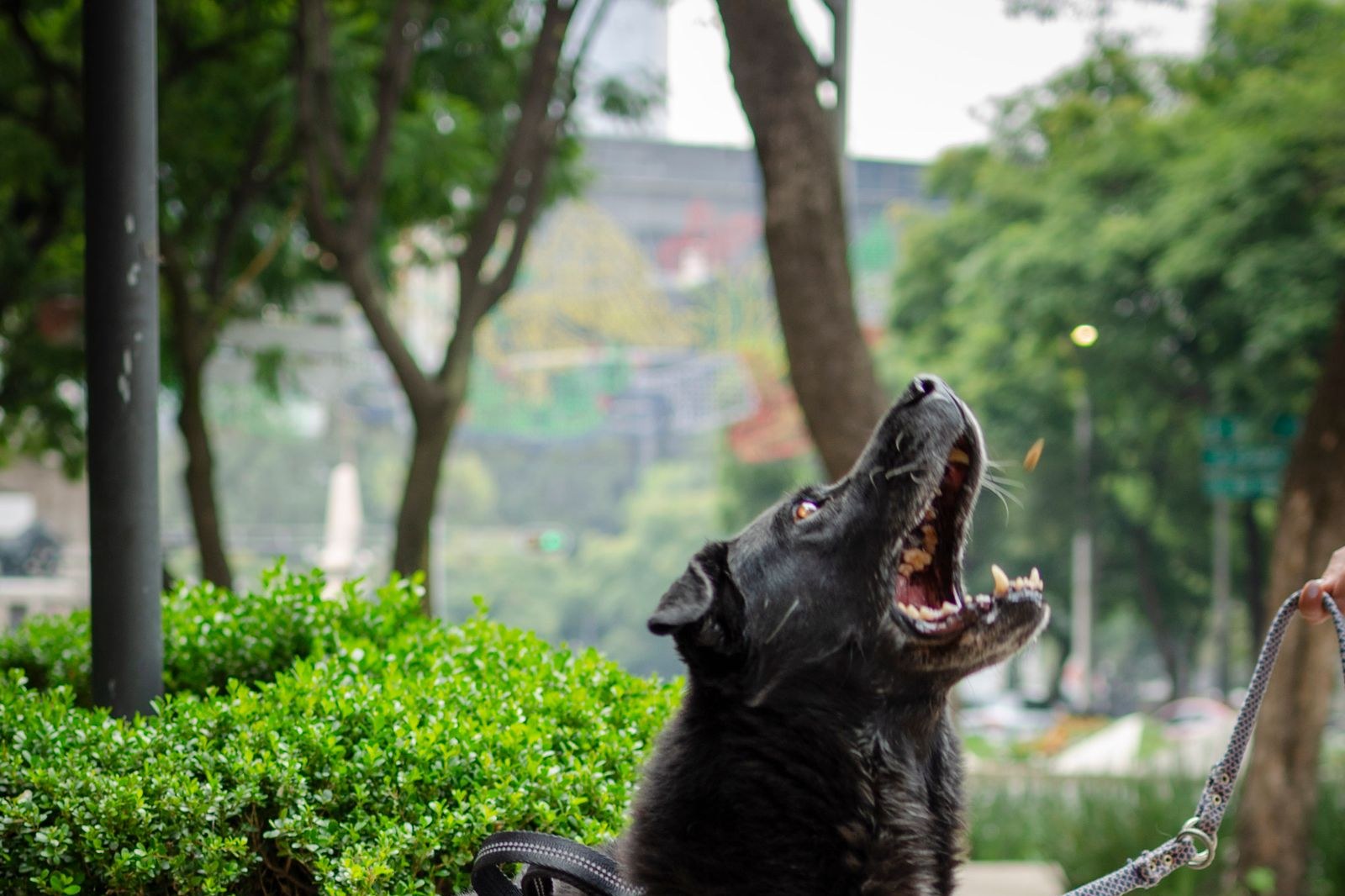
Leash reactivity is fixed by lowering the level your dog lives at during the week, not by winning the moment on the footpath. The bark and lunge at the dog across Melbourne Road is the last link in a chain that started at breakfast: a dog that did not rest, had the run of the house, patrolled the front window, and then went out on a tight lead into the busiest street in Newport. Every reaction it rehearses makes the next one easier. So the first job is to take the rehearsal away and bring the waterline down. The trigger work comes last, and by then it is the easy part.
The two reasons inner west dogs react on lead
Frustration and fear. They look the same from behind the lead and they are treated differently, which is why the first thing I do at a consultation is read which one you have.
- Frustration. The dog wants the other dog more than it wants you, and the lead is in the way. This is the Labrador on the Williamstown foreshore that is "fine off lead" and a screaming mess on it. The fix is to become more interesting than the trigger, which is PLAY, and to teach the dog that a tight lead means something.
- Fear. The dog feels trapped on a tight lead and goes on the offence because it cannot get away. This is the small dog on the Yarraville village footpath with the tucked tail and the high manic bark, the one owners describe as "a social butterfly off lead" because off lead it can choose its distance. The fix is that you take point, so the dog can move to the sidelines.
Get the read wrong and the standard advice makes it worse. Treats posted into a fearful dog's mouth mid-reaction tell it there was something to be afraid of. "Let them say hello" to a frustrated dog teaches it that lunging works. Both dogs need the same first three weeks, though: rest, less freedom, and cycles instead of walks.
Why I run sessions where you actually walk
Newport Village on a Saturday morning, the Williamstown foreshore path, the Yarraville village cafes, Footscray Park, Seddon's narrow footpaths where you cannot cross the road in time, the Docklands promenade with trams and scooters. These are not training grounds. They are your dog's life, and the reactivity was built on them, so the reading has to happen on them. I choose the venue for the dose: a wide car park for space and adults, a fenced puppy school for dogs behind a barrier, a school at pick-up for contained children, then Newport Village when the dog is ready for the real thing. Murphy comes to most sessions. Reactive dogs read her calm and start to copy it.
What the program looks like
The consultation is 90 minutes, $400, in Newport or Docklands. Half of it is reading your dog and reading your hands. The other half is the equipment and the mechanics: the slip lead fitted high and snug, the nine o'clock position, the invisible correction that never visibly comes from you, and your foot on the lead when a trigger appears so the dog cannot launch and you add nothing. You leave with cycles for the week: PLAY, ANCHOR, CALM, in that order, three or four times a day, and no walks for the first stretch. A walk is a messy blend of two modes, and a reactive dog does not have the regulation for it yet.
If the dog needs the program, it is four weekly sessions plus my feedback on your videos in between, $1,600 for the four weeks, $2,000 all up. Owners usually see the first change within days. By the halfway point, two sessions in, the lunging has typically dropped enough that the last two sessions are spent on you: reading the tail base, the ear tango, the two-second clock before the chest commits. By the end you should not need me.
The inner west suburbs I cover
Newport is home. Williamstown, Spotswood, Altona North, Yarraville, Seddon and Footscray are all inside my area, with Docklands as the second base for anyone coming from the city side. Port Melbourne and Kensington are close enough for a small call-out fee. Everything beyond that I take on merit, and online consultations work well for the reading and the plan when the dog is further away.
Sessions run Wednesday to Saturday, on the streets of the inner west
Consultations run in Newport and Docklands, or at your home across the inner west. Bring the dog, the gear you use, and whoever walks it. Fill in the form and I read it myself. Times go out in the order forms arrive.