
In your first 30 days with a rescue dog, keep the first two weeks boring, run short cycles of play, lead work, pottering and rest at home, add small car park outings from week two, and get help straight away if there's a bite, panic or a dog you can't hold.
Everyone will tell you to give it three months. Going slowly at the start is good advice. Waiting three months when your dog is lunging on day two is not. I see around 350 reactive dogs a year in Melbourne, and a lot of them came from shelters and rescues, some of them reactive from the first day home.
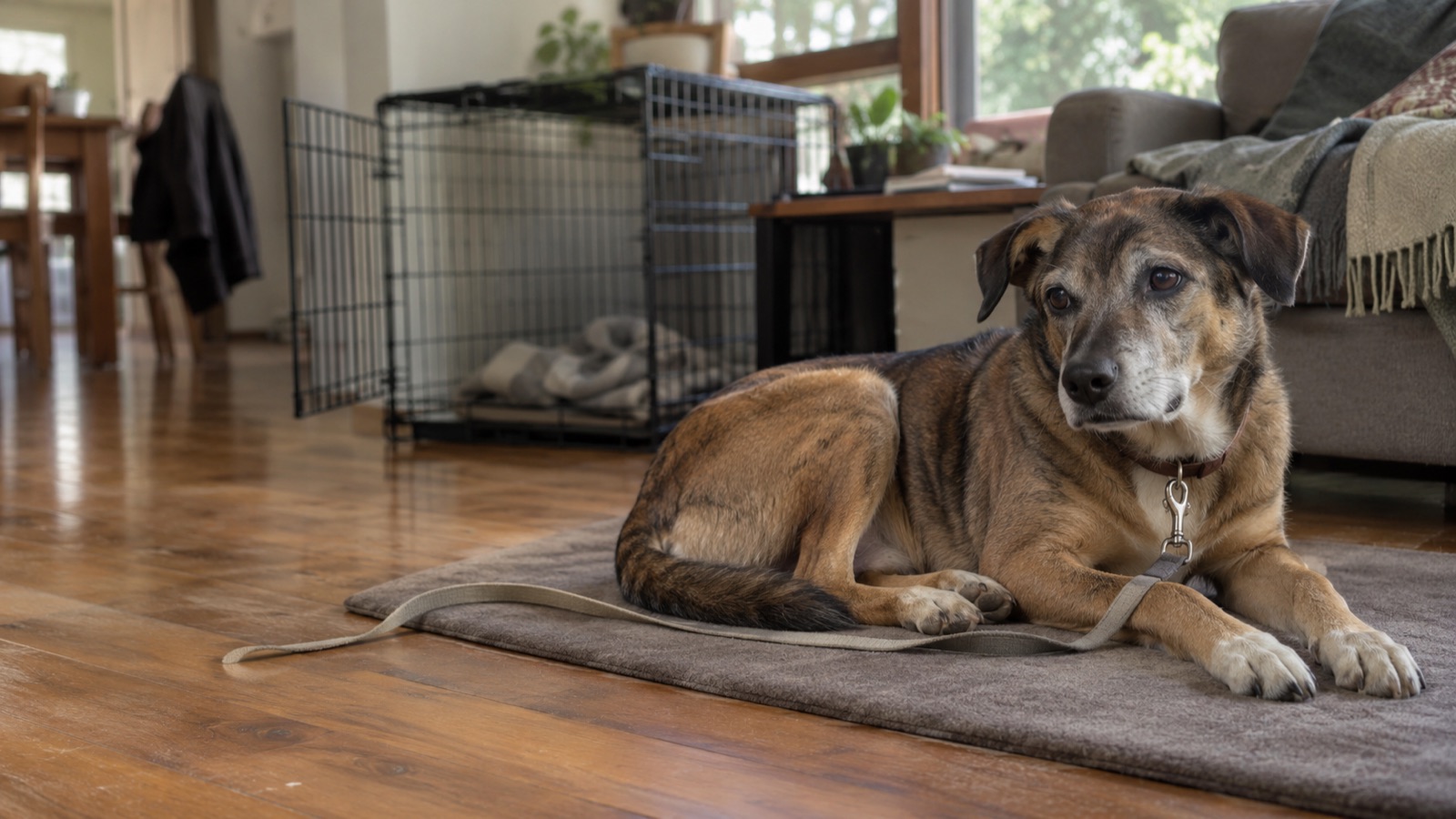
The first 30 days at a glance
| When | Focus | What to do |
|---|---|---|
| Before | Set up | Secure collar, crate in the busiest room, indoor lead, vet check booked |
| Day 1 | Go straight home | Lead on, toilet, walk through the house, meal, rest. No visitors |
| Days 2 to 7 | The house is enough | Three or four short cycles a day, plenty of sleep, one quiet try outside |
| Days 8 to 21 | Small outings | Ten minutes at a quiet car park, one visitor at a time, no dog parks |
| Days 22 to 30 | More of real life | One change at a time, practise being apart while you're home |
What should I ask the shelter or rescue?
Ask whether the dog is on any medication, what it's for, and whether there's a plan to come off it. Ask for the behaviour notes, who to call if you're struggling, and whether anyone has seen the dog walk past another dog on a lead. If the dog is on medication, don't stop or change it yourself. That's a conversation for your vet.
In Victoria, also ask whether the dog is registered with your council, and put the microchip in your name through the registry that holds it. Transfers vary between councils, so check with yours. Agriculture Victoria lists the licensed microchip registries.
What do I do on the first day home?
Go straight home, without stopping at the pet shop or your sister's place. Lead on before the car door opens, every time, because a new dog can back out of a loose collar in a second and it doesn't know where home is. Toilet first, then walk through the house on the lead and let the dog take each room in. Then a meal, and then rest.
No visitors. Kids don't hug, pick up or follow the dog to its bed, and they're never left alone together. If you have another dog, use separate crates and separate meals. Have their first meeting outside, both on loose leads, with another adult. If either one goes stiff, walk away and try another day.
What does the first week look like?
The first week is three or four short cycles a day, using the four modes in my PACE framework, with a lot of sleep in between. Kennels are hard places to sleep.
- PLAY for one to two minutes. Say "ready", move a toy along the floor like a rabbit, say "finish" and put it away. Lots of rescue dogs don't play in week one, so use food on a hard floor and keep offering.
- ANCHOR is a slow lap of the house or yard on the lead, going where you go.
- EXPLORE is pottering around on an indoor lead with you nearby and not engaging. Only leave a lead on while you're supervising.
- CALM is a crate or tether in the room you're in. When the dog demands, no eye contact, no talking, no touching. When it settles, it gets you back. A tether is only for when you're in the room.
Should I walk my new rescue dog in the first week?
It depends what the dog does, so take a short, quiet try when your street is empty. If it's comfortable, keep walks short. Some dogs are worse off shut inside, and a dog pacing and wrecking the house who was fine outside needs to get out more.
If it barks and lunges at other dogs, stop the walks for now, on day two or in month two. Every lunge is practice. Keep running cycles at home and use the car for outings from week two. Clients push back on this more than anything else I say. Here's why I swap walks for cycles.
What happens in weeks two and three?
Drive to a quiet car park at a quiet time. Stand still on a long lead and let the dog sniff everything around you until it's bored and looks up at you. Have a game if it's up for it, then back in the car for a rest. Ten minutes is plenty.
If you see another dog, go wide and keep moving. If you can't get away and your dog can't reach the other one, stand on the lead and give nothing: no talking, no tugging, no treats. Wait for it to come down, then carry on. No dog parks and no on-lead hellos yet. Visitors come one at a time and ignore the dog, with no eye contact, pats or treats from their hand. If your dog has already growled or snapped at someone, skip visitors until you've spoken to a trainer.
How long does a rescue dog take to settle?
There's no set date. I can't find any research behind the 3-3-3 rule, and in a 2023 study of 99 adopted dogs, behaviour was still changing at six months. New things often turn up around week three or four as the dog gets more comfortable and sees more of the world. So don't judge a moment, judge the week. I'm looking for slow escalation, quick recovery, good sleep, and a dog who comes home from an outing quiet. Two lines a day in a log is enough, and it saves a lot of time if you end up seeing a trainer.
When should I stop waiting and get help?
Get help this week, whether it's day 3 or day 30, if any of these are true:
- The dog has bitten or tried to bite a person or another animal, even once.
- It growls or goes stiff around a child. Keep them physically apart until you've had advice.
- You can't physically hold it when it lunges.
- It panics and tries to escape from the house, the crate or its collar.
- Your dogs have fought. Feed and crate them apart, and don't try another introduction.
- You're scared of the dog, or you've started thinking about taking it back.
Call the vet first if the dog isn't eating or sleeping, is sore to touch, has changed suddenly, or seems flat and sleepy all the time. Call the shelter or rescue too, because most have someone you can talk to and they know the history. If there's been a bite, stop that situation happening again tonight. Feed in a closed room if it was over food, and keep a lead on if it was over a collar grab. Don't punish the dog or test it to see if it'll do it again. Then get a professional to see it soon.