
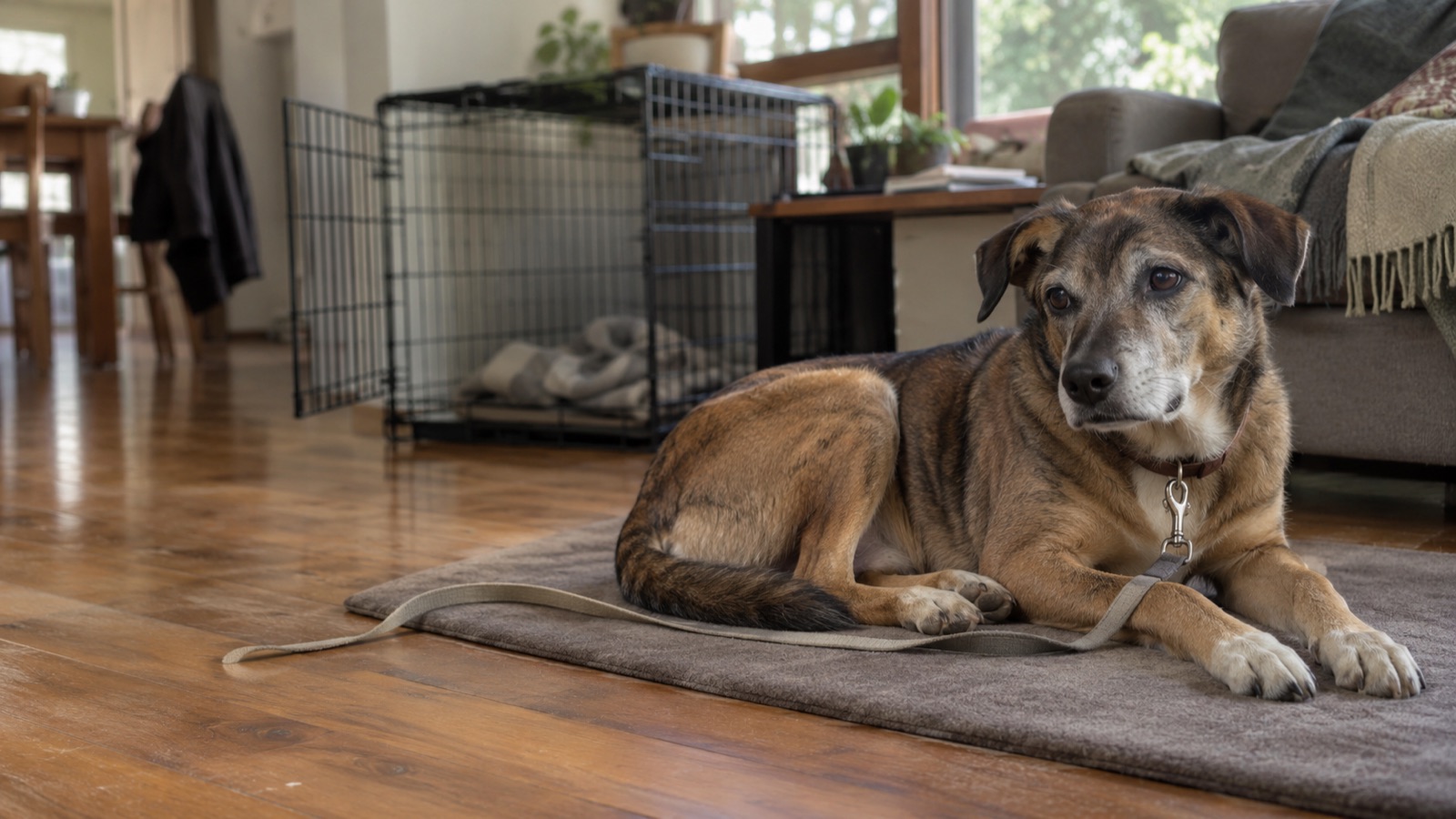
The 3-3-3 rule is a rule of thumb, and I can't find any research behind it: three days to decompress, three weeks to learn the routine, three months to feel at home. It's fine as a reminder to go slowly. It's a bad reason to wait, and I meet a lot of owners who waited.
What it gets right is that a dog who has just left a kennel doesn't need a trip to Bunnings, a dog park and your sister's barbecue in its first weekend. Keep the first couple of weeks boring. I tell my clients the same thing.
The trouble starts at week two, when the dog lunges at everything on the street and the owner says "well, he's only been here a fortnight, everyone says it takes three months." So they keep walking him twice a day, and he gets a lot of practice.
What does the research say about behaviour after adoption?
The closest thing we have is a study by Bohland and colleagues, published in PLOS ONE in 2023. They followed the owners of 99 dogs adopted from five shelters in Ohio, and asked about behaviour at 7, 30, 90 and 180 days.
Stranger-directed aggression, chasing and training difficulty were all higher by day 30 than on day 7, and stayed higher. Excitability and touch sensitivity were up by day 90. Separation behaviour went the other way, and was lower by day 180.
The result I keep coming back to is that aggression and fear towards other dogs didn't significantly change at all. It was already being reported in the first week, and at six months it was still about the same.
That fits what I see. A lot of the adopted dogs I meet were reactive to other dogs from the first day home. Nobody had done anything to them yet. I don't blame the shelters for that, because a kennel is nothing like a footpath in Yarraville on a Saturday morning, and a good shelter will tell you it can't predict everything. But it does mean "he just needs time to settle" may not be the answer for that dog.
It's one small study. Owners filled in the surveys, it covers two cities in the US, and not everyone answered every time. The owners who were happiest may have been the most likely to reply, and every owner who answered at six months said the dog had adjusted well. So a dog getting harder to live with doesn't mean it's going badly. The study also can't tell us why any of it changed. What it does show is that nothing magically happens at three months.
When should you get help for a newly adopted dog?
Look at what the dog is doing and how you're going. I don't count the days.
Call someone this week if your dog has bitten or tried to bite, growls or goes stiff around a child, panics and tries to escape, has fought with your other dog, or lunges so hard you can't hold it. The same goes if you're frightened of your dog or you've started thinking about taking it back. If it's a bite, keep everyone safe tonight by stopping that situation from happening again. Call your vet first if the dog isn't eating or sleeping, seems sore, or has changed suddenly. If it came home on medication, don't stop it yourself, talk to your vet about that as well.
You can probably wait and keep watching if the dog is a bit clingy, sleeping most of the day, not interested in toys yet, or a bit silly in the evenings. All normal. Write it down anyway.
In between those two lists, I want to know how fast your dog comes back down. A dog that barks at the fence and is flopped on the floor a minute later is having a very different week from one that's still panting and pacing an hour later. Slow escalation, quick recovery is what I'm looking for.
Does every rescue dog need a quiet fortnight?
Some rescue dogs get told to stay home for a fortnight, and they go up the walls. A young dog pacing the house and eating the skirting boards, who was perfectly happy outside, doesn't need another week of rest. He needs a short outing and a game.
That's what a rule can't do for you. It gives every dog the same three months. One dog in your house needs less, the one next door needs more, and neither has read the rule.
"Three days? I've been here four. Nobody told me."
I've written up what I'd do in the first 30 days with a rescue dog, day by day. It's general, because I haven't met your dog, but it covers the first day home, whether to walk him, and when to stop waiting.
If you'd rather I looked at your dog, I see a lot of rescues. Here's how I work with them.