
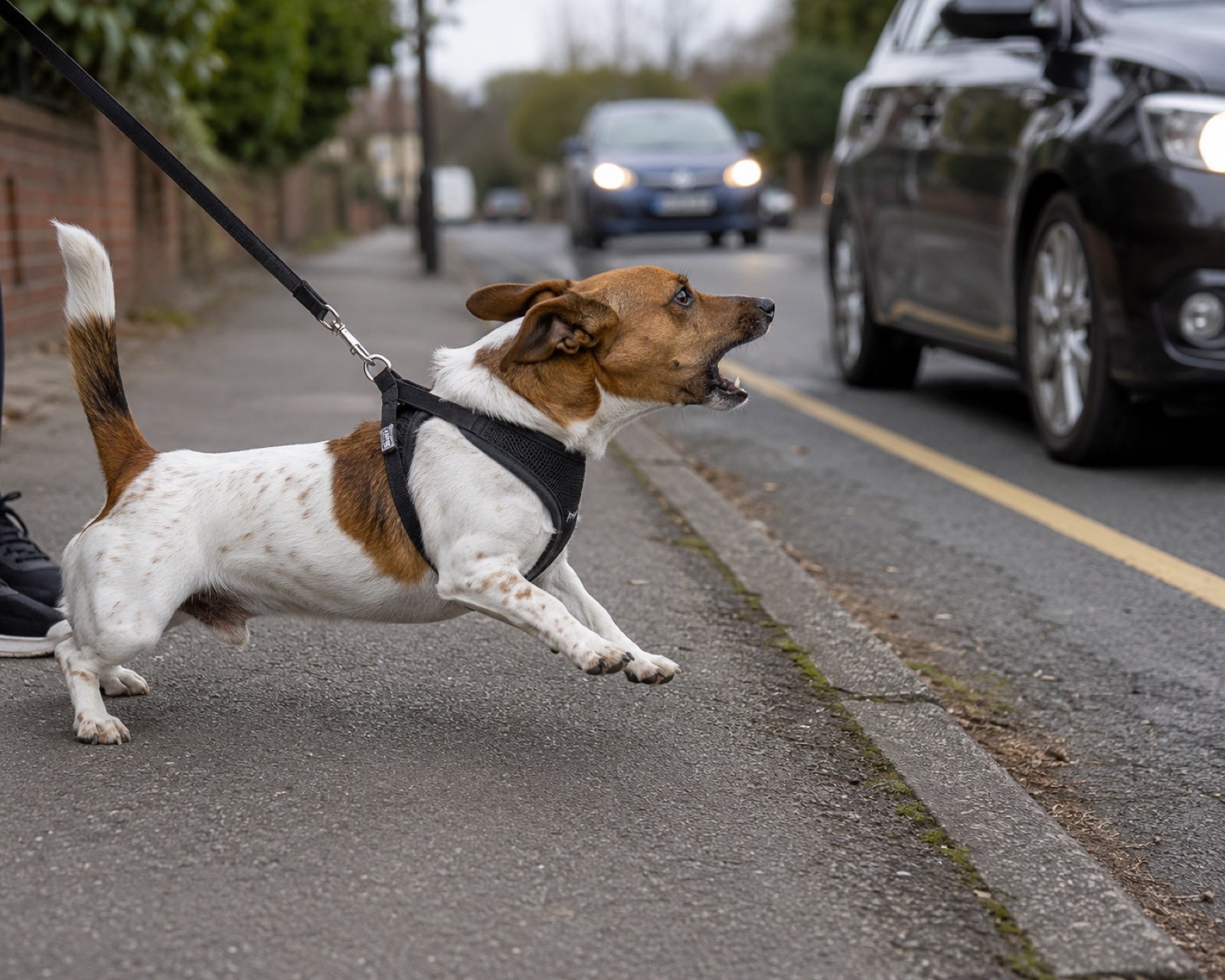
Do not punish the reaction, do not force your dog to face the thing it fears, and do not tighten the lead and march through. The fastest way to keep a dog reactive is to do what instinct tells you in the moment. Almost every common mistake comes from the same place: trying to fix the reaction while it is happening, instead of changing the dog so the reaction stops coming. Here are the moves that make it worse, and what to do instead.
Do not punish the bark
When a dog barks and lunges at another dog, a yell or a leash correction feels like the obvious answer. It backfires twice. First, you have added a second unpleasant thing right as the trigger appears, so the dog now has more reason to find that trigger threatening, not less. Fear becomes aggression this way. Second, the bark is a warning, the dog's way of saying it is not coping. Punish the warning often enough and some dogs stop giving it. What you are left with is a dog that goes straight to the bite with no signal first. The bark is information. You do not want to switch it off.
Do not flood the dog
Flooding is exposure with no escape: the dog park to "socialise" a dog that cannot cope with dogs, the busy street to "get him used to it." Forcing a frightened dog to stay in the thing it fears does not desensitise it. It overwhelms it, and an overwhelmed nervous system learns that the world is exactly as bad as it suspected. Change happens at a distance the dog can handle, not in the deep end. If your dog is over threshold, it is not learning anything except how to panic.
Do not force greetings
"Let them sort it out" is how on-lead greetings go wrong. Two dogs nose to nose on tight leads, neither able to move away, is a setup for a fight, and for a reactive dog it confirms that other dogs mean pressure. Greetings are not the cure for dog reactivity. Distance is. A dog learns other dogs are safe by watching them be boring from far enough away, over and over, not by being walked into one.
Do not tighten the lead
A tight lead does two things to a reactive dog. It transmits your tension straight down the line, and it physically braces the dog into the very posture that precedes a lunge. Owners tighten up the second they spot a trigger, which means the dog gets the warning that something is coming before it has even seen it. Keep the lead loose, put your foot on it if you need security, and let your own body stay soft. The dog reads your body before it reads the street.
Do not feed the moment
Once the reaction is underway, talking the dog down, patting it, locking eyes, or posting a treat into its mouth are all inputs. They tell an over-aroused dog that this moment is real and worth staying in. You think you are soothing. You are confirming. The hard skill is to add nothing: stay quiet, keep the dog safe, and let the arousal crest and fall on its own. I wrote the full version of this in what to do when your dog lunges and barks.
Do not just walk it more
"A tired dog is a good dog" is the advice that sinks more reactive dogs than any other. A long daily walk past a line of triggers is not draining the dog. It is raising the baseline and rehearsing the reaction twice a day. Tired and calm are not the same state. A reactive dog usually needs less walking and more structure while the baseline comes down, not a longer lap of the same gauntlet.
Do not yell, then feel guilty, then go soft
The most common pattern I see is not one mistake, it is the swing. The owner snaps when the dog reacts, feels terrible about it, then over-comforts to make up for it. The dog gets a confusing mix of pressure and reward around the same trigger and learns nothing clear. Dogs do forgive a raised voice, so the guilt is not the problem. The inconsistency is. One calm, steady response every time beats a hot one followed by an apology.
What to do instead
Every one of these mistakes is a version of working on the reaction in the moment. The actual work happens everywhere else: lowering the daily arousal with rest and structure, keeping the dog under threshold so it stops rehearsing, and learning to read the dog so you respond earlier and softer. That is the whole approach, laid out in how to stop a reactive dog. Get those right and the moments you used to dread mostly stop arriving.
Common questions
Should you punish a reactive dog?
No. Punishment around a trigger raises arousal and can turn fear into aggression, and it suppresses the warning bark you actually want to keep.
Should I let my reactive dog meet other dogs?
Not as a fix. Forced greetings flood an over-aroused dog. Distance and calm exposure under threshold are what change reactivity.
Will I make it worse by comforting my dog?
Cooing and treating mid-reaction feed the arousal state. You will not reinforce the emotion with kindness, but you do confirm the moment by adding attention to it. Stay quiet and steady instead.