
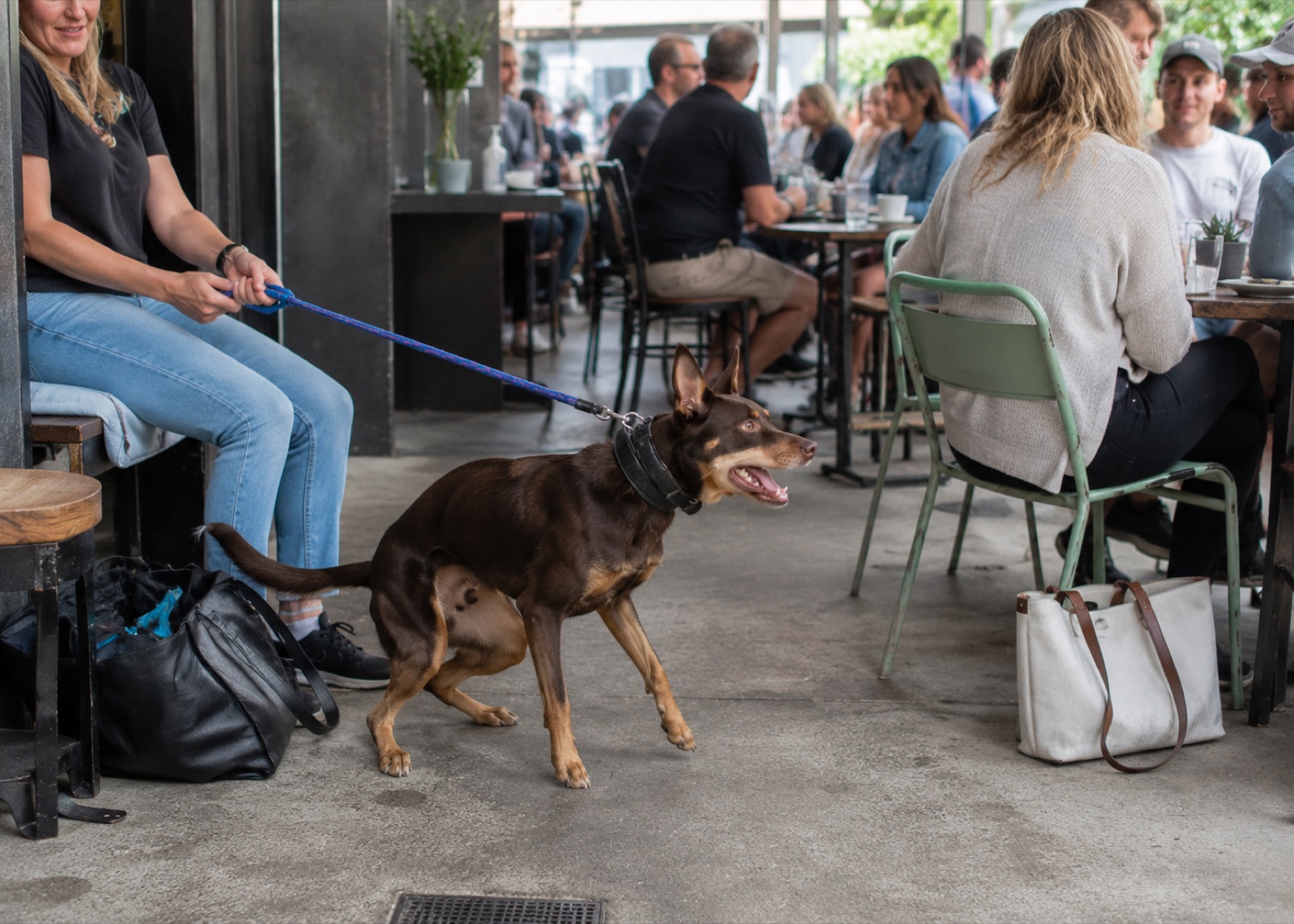
Breed is only half the story, and it is the smaller half. People expect me to name a few high-drive, watchful types and warn them off, but in fifteen years and more than 3,000 dogs I have worked with reactive dogs of every breed and calm dogs of every breed. What separates them is almost never the breed. It is whether the dog's needs are being met and whether it has been taught to make good decisions. It comes down to training and the life the dog is given, not the label on its papers.
Why breed gets the blame
Some dogs are wired to notice more and respond faster. A dog bred to work all day carries more drive and more energy, and if that drive has nowhere to go it can come out as reactivity. That part is real. But it is a tendency, not a sentence, and it tells you very little about how a given dog will turn out. A high-drive dog whose needs are met and whose owner reads it is calm. The same dog, under-rested and walked past triggers every day with no outlet, becomes the stereotype people then pin on the breed. The breed did not do that. The setup did.
What actually decides it
Whether a dog becomes reactive comes down to the things you can change. Is it getting real rest, or running on a high baseline all day. Does its energy have an outlet. Has it learned to value its owner, or to value every dog and person on the street more than the person holding the lead. Has anyone taught it how to make a good decision when something exciting or worrying appears. Get those right and a so-called reactive breed lives a calm life. Get them wrong and the gentlest dog in the world can struggle.
So which breed should I choose?
If you are picking a dog and worried about reactivity, the breed matters less than where you get it from and your willingness to meet the dog's needs. A puppy from someone who raises and socialises the litter properly, matched to a home that can give it rest, an outlet, and clear structure, has every chance of being calm, whatever the breed. A dog of that same breed, badly raised and under-met, does not. Choose the upbringing and the lifestyle, then put the training in.
If you already have a "reactive breed"
If you have been told your dog is a reactive breed, ignore the label and work the dog in front of you. The job is the same for every dog: lower the baseline, meet the needs, and teach it to make good decisions around its triggers. The full approach is in how to stop a reactive dog. I have helped plenty of the breeds that top these lists become calm, relaxed dogs, because the list was never the thing holding them back.
Common questions
Which dog breeds are most prone to reactivity?
Breed is only half the story, and the smaller half. Any breed can be reactive and any breed can be calm. Some high-drive working types have more energy to manage, but whether a dog reacts comes down to training and whether its needs are met, not the breed.
Is reactivity caused by breed or training?
Overwhelmingly training and the dog's daily life. Breed sets a tendency, but rest, an outlet, and whether the dog has learned to make good decisions decide the outcome. A well-raised, well-trained dog of any breed can be calm.
Can any breed be reactive?
Yes, and any breed can be calm. The gentlest dog can struggle if its needs go unmet, and the most driven dog can be relaxed when it is met and trained well.