
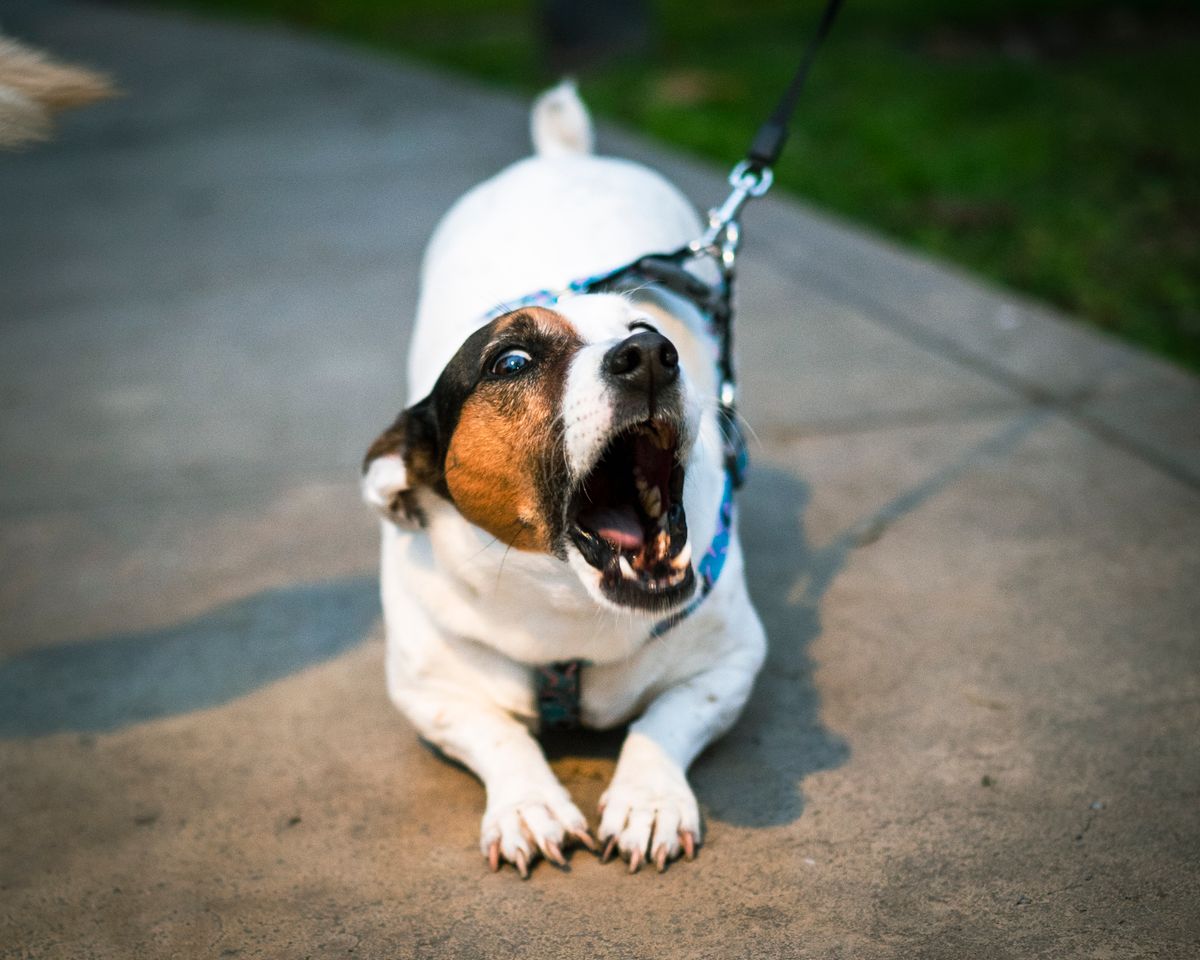
Your dog is reactive because its arousal crosses a line and tips into barking, lunging, or freezing. The raw sensitivity is partly genetics and partly early experience, neither of which you can change now. But whether the dog actually tips over on a given walk comes down to its baseline: how rested it is, how much freedom it has, and how many times it has already rehearsed the reaction. That part you can change, which is why the cause matters more than the trigger.
Owners usually come to me with the trigger, "he hates other dogs," "she loses it at bikes." The trigger is real, but it is the last link in the chain, not the cause. The same dog will walk past six dogs and erupt at the seventh. The seventh dog was not worse. The dog was already full.
The baseline is the real cause
I picture every dog sitting at a waterline, a baseline level of arousal it carries through the day. Triggers are waves on top. A dog living near high tide has almost no room before a wave spills over, so it reacts to things a calmer dog would ignore. Three everyday factors set that tide line higher than owners realise: not enough real sleep, too much freedom and stimulation, and a daily walk that rehearses the reaction. Sort those and the same triggers stop landing, because there is room under them again.
The three emotions underneath
Reactions that look identical from the outside come from different places. Telling them apart is most of the diagnosis.
Fear
The fearful dog wants the scary thing to go away. The bark means "back off." This is the dog that startles at the corner, that cannot recover after a fright. Fear-based reactivity needs space and safety, not pressure, and it is a different job from the others. Bodhi the Spoodle was a clear case, a dog who could not get past the corner without being spooked.
Frustration
The frustrated dog wants to get to the thing and cannot. The lead is in the way, so the arousal comes out as barking and lunging that looks aggressive but is closer to a tantrum. This is the bulk of leash reactivity. The dog is not trying to drive the other dog off. It is furious it cannot reach it.
Missing out
The FOMO dog desperately wants to greet every dog and person, and loses its hearing for you the moment one appears. It looks friendly, which is why owners excuse it, but a dog that cannot be with you near other dogs is as stuck as a fearful one. Herne the Munsterlander was this dog, all FOMO and no off switch on the lead.
Common triggers, and why they are not the point
The usual suspects are other dogs, people, bikes, cars, skateboards, the doorbell, and sudden noises. Some dogs are set off by one, some by the whole list. But notice that the trigger only fires the reaction. It does not decide whether the dog tips over. That is decided by the baseline. This is why "just avoid the trigger" is incomplete advice: useful for stopping the rehearsals in the short term, but it does nothing about the tide line that makes the dog so easy to set off in the first place.
Why it often starts in adolescence
A lot of reactivity shows up between roughly six and eighteen months, and owners assume they did something wrong in that window. Usually they did not. A young dog's nervous system gets more sensitive before it settles, and a teenage dog with energy to burn and a brain that overreacts is primed for it. Handled well, it passes. Left to "grow out of it" while rehearsing on daily walks, it sets in. Age is not the cure. Lowering the baseline is.
So what do you do with the cause?
You work on the baseline, not the trigger. Real rest, less free stimulation, structure in place of chaotic walks, and exposure to triggers only at a distance the dog can handle. Reading which of the three emotions is driving your dog tells you how to handle the moment, and reading the body language tells you when the dog is climbing before it tips. The full approach is in how to stop a reactive dog. The trigger is where the reaction shows. The cause is where the work is.
Common questions
What causes a dog to be reactive?
Arousal crossing a threshold. The sensitivity is partly inborn, but the daily baseline, set by rest, freedom and rehearsal, decides whether the dog tips over. Fear, frustration and missing out are the emotions underneath.
What are common triggers?
Other dogs, people, bikes, cars, skateboards, doorbells and sudden noise. The trigger fires the reaction, but the baseline decides whether the dog goes over.
Why is my dog reactive to other dogs specifically?
Usually fear, frustration, or FOMO. They look alike but need different handling, which is why reading your dog comes before any drill.