
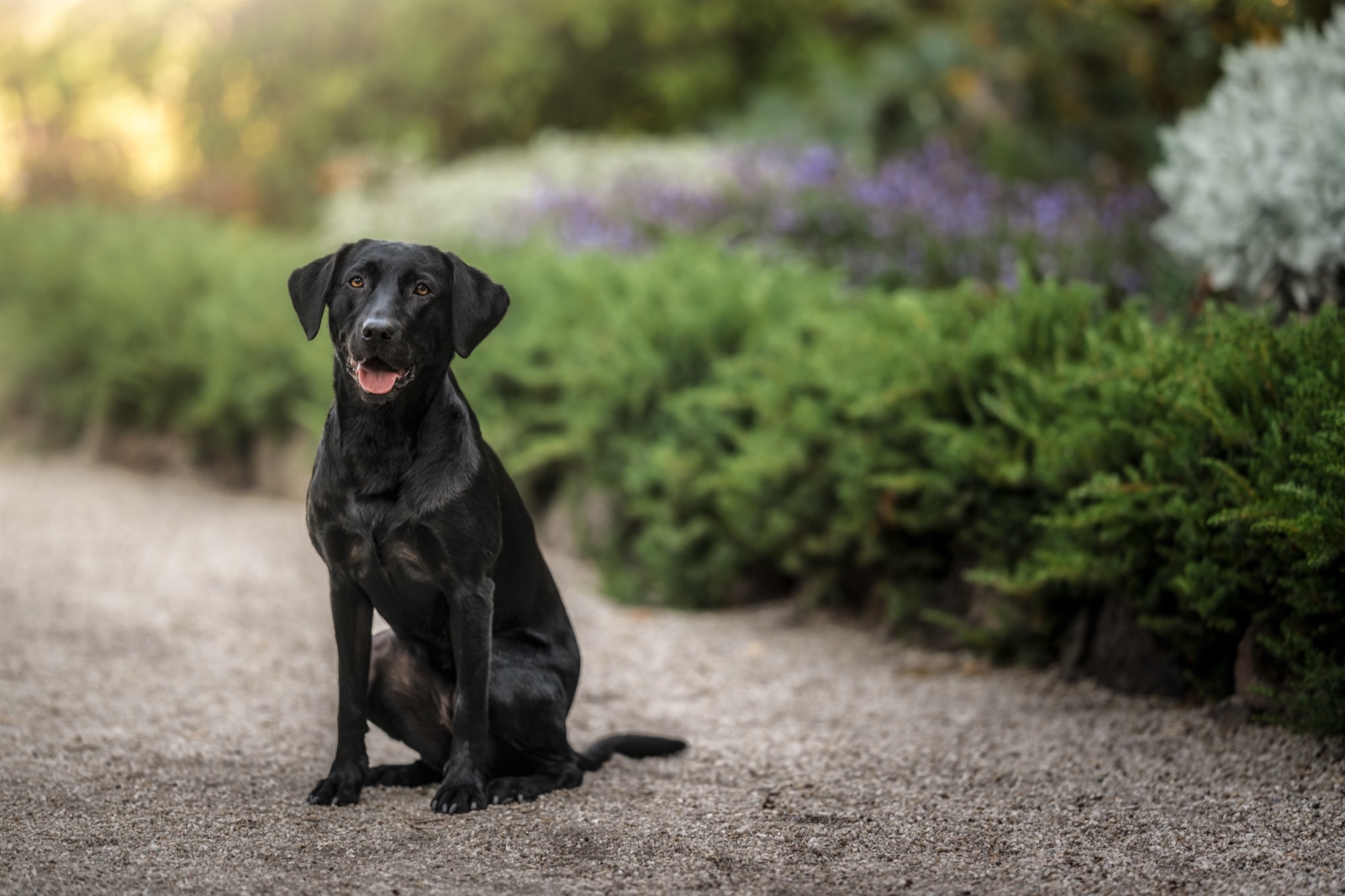
The honest answer is that walking a reactive dog well is hard to do on your own. Without a guided structure it is difficult to give a dog the understanding it needs on a walk, so the most useful thing I can tell you is to get proper guidance before you try to push through it. Still, there are a few things you can do in the meantime that keep your dog under control and, just as importantly, do not make the reactivity worse.
Keep the lead loose
The single most important habit on a walk is a loose lead. A tight lead carries your tension straight to the dog and braces it into the posture that comes right before a lunge, so the moment you tighten up you have told your dog that something is wrong. Keep your hands soft and let the lead hang. If you need security in a tight spot, put your foot on the lead rather than hauling up on it.
Use a longer lead
If your dog has not yet learned to walk nicely on a loose lead, a longer lead helps. A three metre lead gives your dog room to move without being tugged the whole way, which keeps the tension out of the walk. A dog that is being corrected every few steps is a dog being wound up, and a wound-up dog is closer to reacting. The extra length is not about letting the dog do as it pleases. It is about taking the constant pressure off while you both learn.
Avoid the trigger when you can
Without a trainer guiding you through it, the safest thing to do when you see another dog is to avoid it. Turn around and go the other way, or cross the road. There is no shame in this. Every reaction your dog rehearses makes the next one more likely, so giving a trigger a wide berth is you taking the practice away, not failing at the walk.
When a trigger is unavoidable
Sometimes you cannot make space. A dog appears around a blind corner, or the path is too narrow to cross. When that happens, put your foot on the lead so your dog is safe and cannot launch, stay quiet, and let the trigger pass. Then carry on. The key is that you do not feed the dog's energy in that moment: no talking it up, no tugging, no fussing. You let the wave pass and you move on. More on why doing nothing works in what to do when your dog lunges and barks.
The most important thing is guidance
None of the above teaches your dog to walk past a trigger calmly. It keeps a lid on things while you get help. The real work, lowering the baseline and then teaching your dog to make good decisions around other dogs, is guided, and it is what I do with owners in a programme. If walks are something you both dread, that is exactly what I help with. You can read the full approach in how to stop a reactive dog, or get in touch about private training.
Common questions
How do you walk a reactive dog?
Keep the lead loose, use a longer lead if your dog has not learned to walk nicely yet, and avoid triggers where you can by turning around or crossing the road. If a trigger is unavoidable, put your foot on the lead, let it pass, and carry on without feeding the energy. To actually teach a dog to walk calmly past triggers, get guided help.
Should I use a short or long lead for a reactive dog?
A longer lead, around three metres, often works better while a dog is still learning, because it gives space without constant tugging. A dog being corrected every few steps is wound up and closer to reacting. Keep whatever lead you use loose.
Can a dog grow out of leash reactivity?
Rarely by itself. The daily walk keeps it rehearsed. It improves when the arousal comes down and the dog is guided through triggers, not simply when it gets older.