If your dog won't come when called, the most likely reason is not that it doesn't know the word. It knows the word. Its arousal is too high to use it. A dog at the park with its brain full of smells, birds and other dogs is not refusing you, it is full, and no amount of extra "come" gets through, because the problem was never vocabulary. And underneath that sits a bigger surprise: I rarely teach recall in my programs at all, because a dog that has learned to walk with its person barely needs calling in the first place.
Listen to a dog park for two minutes
Stand at any off-lead park and count the words. Come. Come come come. Max! Maxy! COME. The dogs' names on repeat, all directions, all morning. Every one of those owners is telling you the same thing: their dog is not actually walking with them. The calling is not the solution. The calling is the symptom.
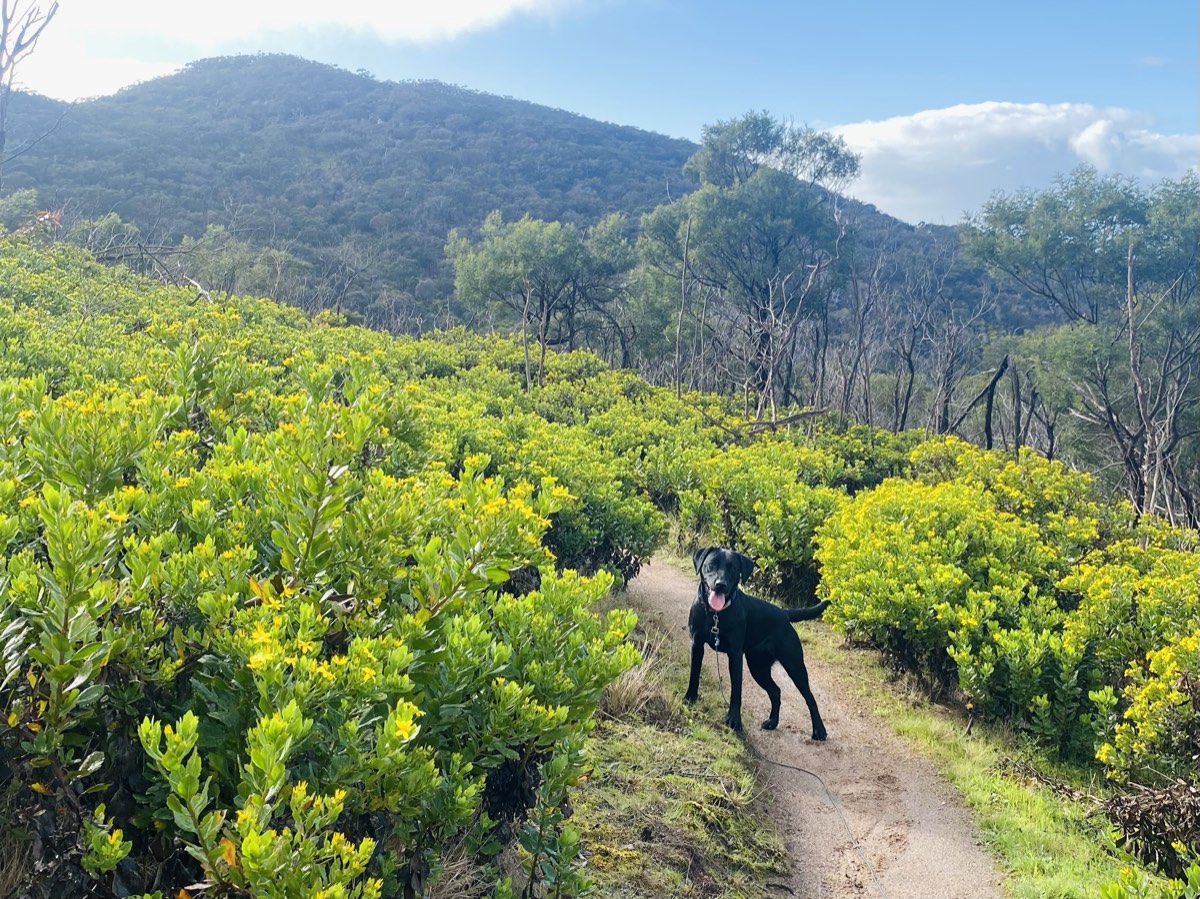
Now watch the dog that never gets called. It drifts ahead, sniffs, lets its person catch up and pass, drifts again. Nobody says a word. When its person stops, the dog notices within seconds, because keeping track of the pack is the dog's job and it knows it. That dog didn't get a better recall. It got a better walk.
Your dog knows the word. It can't reach it.
In Hong Kong, where I grew up, we memorised the times tables from age three. Rote learning, on the wall from day one. I don't know why 12 times 12 is 144. That's how it's memorised. But put me under pressure, on a stage, panicking, and it's gone. Not because I need more drilling. Because I need to fix my stage fright. Once the stage fright is gone, everything comes back.
Recall is the same. Your dog comes beautifully in the kitchen and ignores you at the park, and the industry answer is drill more, gradually add distractions, repeat repeat repeat. My answer is different: the word is already in there. Work on the arousal instead. When the excitement level comes down, the same dog hears you fine, without a single extra repetition. That is why my recall work looks nothing like recall work. It looks like bringing the dog's waterline down, building real one-on-one PLAY so I'm worth choosing over the environment, and teaching free time as a skill with rules.
Free time has rules, and the rules replace the calling
In my system a dog's free time is a mode I call EXPLORE: be a dog, within reason. Sniff, potter, read the news on every pole. Two rules hold it together. You never hit the end of the lead, and you never drag, in any direction. The dog learns to live inside an invisible bubble around its person, and the bubble moves because the pack keeps moving. A smart dog works this out quickly: range ahead, sniff while the pack catches up and passes, catch up again. Always in the bubble, never at the end of the line.
Once that bubble exists, recall becomes almost redundant. If I want my dog close, I just stand still. She's already nearby, and within a few seconds she clocks it: oh, this pack's stopping. No word needed. The dog that has to keep track of you comes closer on its own than the dog that gets tracked by you.
Stop repeating yourself
Every repeat of "come" does two things, and both work against you. It teaches the dog the word is optional, an opening bid in a negotiation rather than information. And it broadcasts exactly where you are, which means the dog never has to look up. Why would it check on a pack it can hear narrating its own position every ten metres?
So when the recall fails, go quiet. Stand still or walk the other way. Let the dog discover it has lost you. For most dogs the discovery lands harder than any amount of calling, because dogs are built to stay with the pack. There's no point making them stay close when they already have that instinct. You just have to stop drowning it out.
When I do teach come
I do keep a formal come, and it means one exact thing: come and sit in front of me. It's a task, not a leash substitute, and it gets used sparingly, because if your dog is enjoying genuine free time and you keep firing obedience into it, you're ruining the mode. It's like we're playing Monopoly and suddenly you're checking your emails. Free time that gets interrupted with commands every minute stops being free, the frustration climbs, and the dog starts tuning you out to protect its own walk. Say it rarely, mean it completely, and the word keeps its value.
The order that works
Build the bond first, through real one-on-one play, so that you are worth choosing. Bring the baseline down so the park stops flooding the brain. Teach EXPLORE with its two rules on a long line, so the bubble exists before any freedom is real. Go quiet, so the dog's own pack instinct does the tracking. And keep one formal come for the moments that matter. Do it in that order and the question stops being how do I get my dog to come back, because the dog stopped leaving.
Common questions
Does my dog know what come means?
Almost certainly. If your dog comes in the kitchen and ignores you at the park, the word was learned. What changed is the arousal. A dog over its head in excitement cannot perform things it knows, the same way a person forgets a rehearsed speech under stage fright. The fix is the arousal, not more repetitions of the word.
Should I use treats to teach recall?
Treats can start a recall, but a recall built only on food fails exactly when you need it, because the moment something is more interesting than your snack, you lose the auction. A dog that comes reliably is a dog that chooses its person over the environment, and that choice is built through one-on-one play and structure, not bidding.
Is my dog ignoring me out of stubbornness?
No. A dog at the park with its arousal through the roof is not defying you, it is full. Its brain is on the smells, the dogs, the birds, and there is nothing left over to process your voice. Bring the arousal down and the same dog hears you fine.
How often should I call my dog on a walk?
Rarely. If you are calling every thirty seconds, the recall is not working and the dog is not actually walking with you. A dog that has learned free time properly stays inside an invisible bubble around its person and keeps track of you on its own. The constant calling is the symptom to fix, not the tool to sharpen.
What do I do when my dog does not come?
Stop calling. Every repeat teaches the dog the word is optional and tells it exactly where you are, which means it does not need to check. Stand still, or walk the other way, and let the dog discover it has lost its pack. A dog that has to keep track of you comes closer on its own than one that gets tracked by you.