
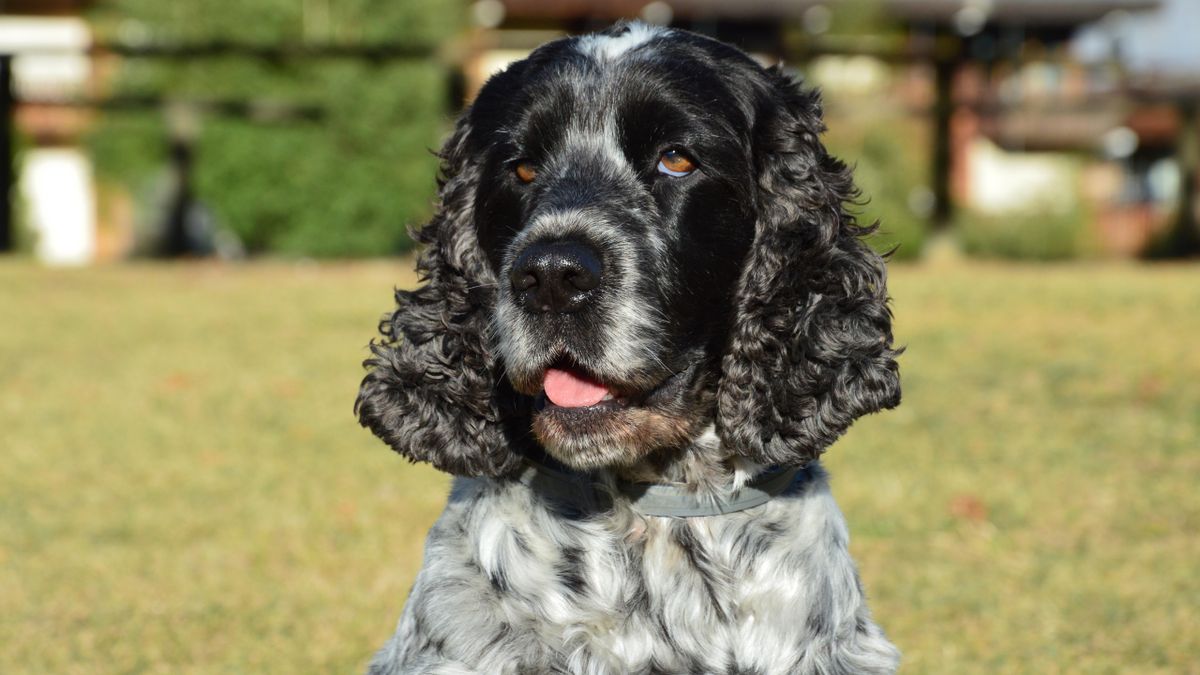
Training a Cocker Spaniel means giving its working nose and brain a real daily job and a taught off-switch, because the busyness owners call hyperactive is usually a gun dog with a working brain and no work. Spaniels arrive in my sessions with a particular flavour of problem. The dog is not aggressive, not really anxious, just relentlessly, exhaustingly busy. It cannot settle, it has its nose in everything, it spins up at the smallest thing and takes an age to come down. Owners often tell me their Cocker is hyperactive. Usually what they have is a working dog with a working brain and no work, which is a very different thing to fix.
A gun dog never really clocks off
Cockers were bred to flush and retrieve game, quartering ground all day, nose down, driven by scent and the thrill of finding. That drive does not switch off because the dog now lives in Yarraville. A spaniel needs to use its nose and its body in a way that satisfies the hunting sequence, and if you do not give it an outlet, it invents one: barking at the window, obsessively retrieving the same toy, chasing the cat, hoovering the footpath on every walk.
So the first question with a busy spaniel is never how do I stop the behaviour. It is what is this dog's drive doing with nowhere to go. Real nose work and brain work in ANCHOR, and proper one on one PLAY that runs the hunting sequence the way the dog is built for, do more to settle a spaniel than any amount of telling it off.
About spaniel rage
Owners of solid-coloured Cockers in particular sometimes arrive worried about spaniel rage, the idea that the breed carries a sudden, unprovoked aggression. Genuine rage syndrome, a neurological condition, exists but is genuinely rare, and the great majority of what gets labelled with that scary name is something far more ordinary: a high-arousal dog that has tipped over, or a dog that is guarding a resource and was never read until it growled. Both of those are workable. The label is not a diagnosis, and treating an over-aroused spaniel as if it has a brain disorder usually means missing the simple thing that would actually help.
The one way gun dogs read differently
Most of reading a dog is universal, but spaniels and the other gun dogs, the pointers and vizslas, carry one quirk worth knowing. In most dogs the pupils widen under high arousal and fear. In gun dogs they often do the opposite and shrink under stress. It is a small thing and it catches people out, because the textbook signal runs backwards in exactly the breed in front of them. With a spaniel I read the whole dog, the tail base, the body tension, the freeze, and I do not lean on the eyes the way I might with another breed. If you want the full picture of what to watch, it is in the post on reading body language.
What a Cocker Spaniel actually needs
A job for the nose and the brain, every day, not just a walk. A real off-switch through CALM, because a spaniel that has never been taught to switch off will run itself, and you, into the ground. Outlets that satisfy the hunting drive on your terms, so the dog is not satisfying it on its own with the cat or the doorbell. And an owner who reads over-arousal for what it is rather than mistaking a busy brain for a behavioural disorder. Give a spaniel those and the relentless busyness settles into the bright, affectionate, biddable dog the breed is at its best.
If your spaniel cannot switch off, or the over-arousal is tipping into guarding or snapping, the private training program starts by reading your dog and building the outlet and the off-switch first. I work across Newport, Williamstown, Docklands and Melbourne's inner west.