I learned a technique in therapy this week called urge surfing. It is a mindfulness skill for riding out a craving or an impulse without acting on it. You feel the urge rise, you notice it, and you let it crest and fall without giving in. The urge passes on its own if you don't feed it. You don't have to fight it and you don't have to obey it. You just have to outlast it.
I sat with that for a while, because it is almost exactly what I ask owners of reactive dogs to do. Except I ask two of you to do it at once. The dog, and you.
The dog's wave
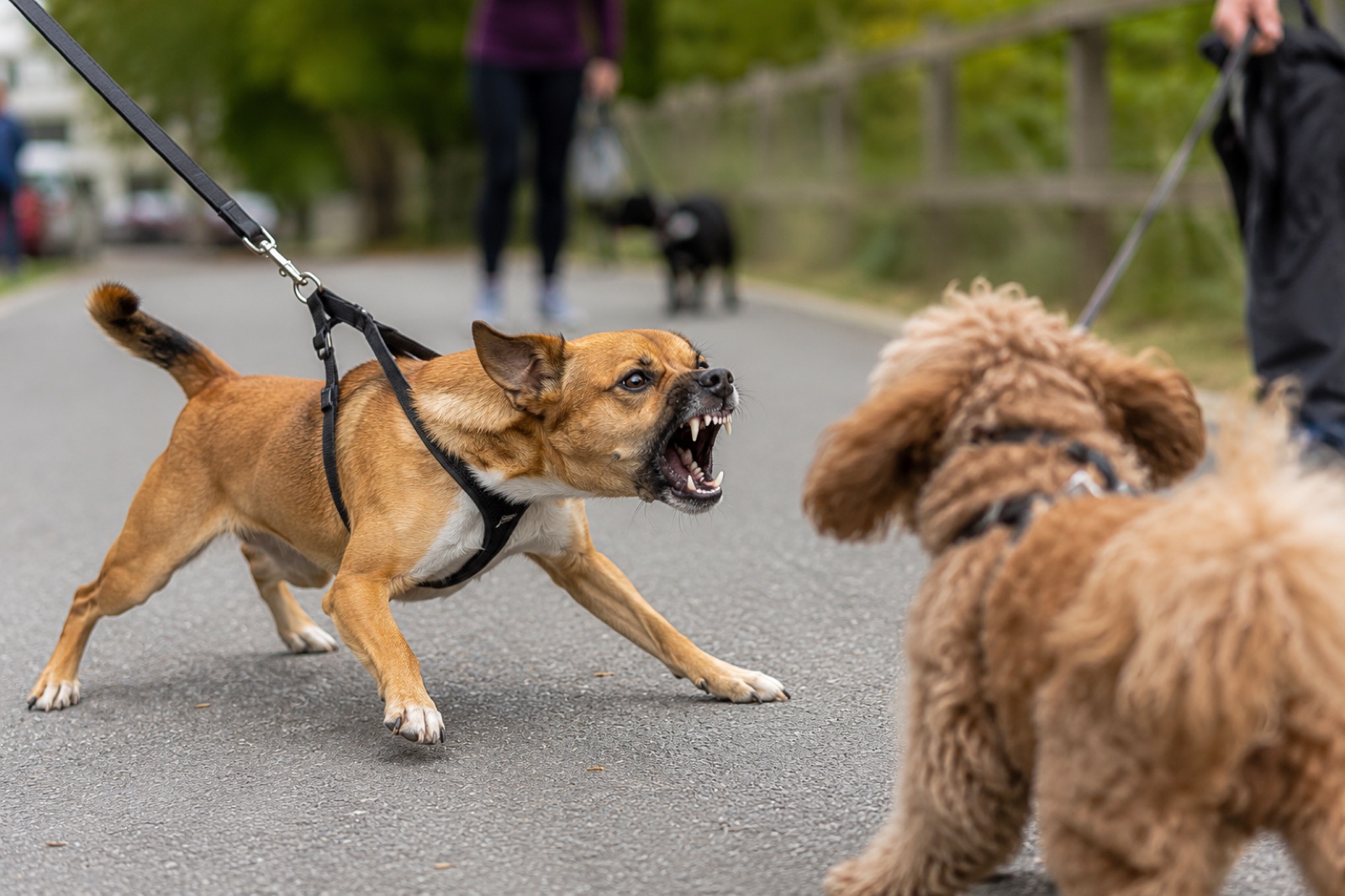
When a reactive dog lunges and barks at the end of the lead, the dog is in the grip of an urge. Something crossed its threshold, the arousal spiked, and the body did what an aroused body does. We tend to treat that moment as an emergency that has to be solved right now. We talk to the dog, we tug, we reach for a treat, we lock eyes and try to call it back to us.
Here is the problem. To the dog, all of that is validation. The forms it takes are:
- eye contact
- talking
- touching
- treats
These are inputs. They tell the dog that the moment it is having is a real and important one, worth responding to, worth staying in. We think we are calming the dog. We are confirming the dog.
So the first thing I ask is that you stop adding inputs. Let the dog have the wave. Let it lunge, let it bark, and let it find out that the wave crests and falls on its own, the same way an urge does in a person who doesn't act on it. Most dogs come off the edge if we don't keep them on it. This is the same thing the waterline model describes: the reaction is the water cresting the rim, and it drops again if nothing keeps topping it up.
Your wave
The harder part is that you are having an urge too.
When your dog reacts in public you feel something. Frustration, because you have worked on this. Embarrassment, because people are looking. Fatigue, because you are sick of it, sick of the reactivity, sick of bracing every time you leave the house. Those feelings are urges of their own, and they push you to do something, anything, to make the moment stop.
That push is the thing to surf. The instinct to fix it right now is the same instinct that feeds the dog. You are not failing your dog by staying quiet and still. You are doing the harder and more useful thing.
Put your foot on the lead
Here is what to do with your hands while you do nothing with your mouth.
Put your foot on the lead. Short enough that the dog is safe and can't launch, loose enough that you are not holding it inside the reaction. Now you have a job, and the job is to watch.
Observe the dog. Three things are worth tracking:
- the body language overall, ear set, weight, the hard stare and when it breaks
- which part of the dog is actually moving, the front end, the tail, the head
- how long it takes the dog to recover once nothing is added
You will be surprised how often the recovery is shorter than the story in your head. Ten seconds, thirty, a minute. If you don't know what a reaction coming down looks like, the body language is where to start.
That information is the whole point. A dog you have observed is a dog you understand, and a dog you understand is one you can do something real about later, when you are calm and not in the middle of it. Reactivity does not get solved at the end of the lead in the heat of the moment. It gets solved in the patterns you start to see once you stop reacting to the reaction.
So the next time your dog goes off, try giving nothing. No eye contact, no words, no touch, no treat. Foot on the lead, and watch. Let the dog's wave pass, and let yours pass with it.