No, enrichment toys like food puzzles, snuffle mats and licky mats do not calm your dog down. They are scavenging, not brain work, and a dog who spends every day scavenging is a dog being taught never to switch off.
I know most of you own the whole aisle. The Kong, the snuffle mat, the licky mat, the puzzle with the little sliding drawers. You were told a mentally stimulated dog is a calm dog, so you kept the brain busy. And the dog is still pacing the house at 9pm, so you went back and bought another puzzle. I see this in living rooms every week.
Scavenging is not brain work
Food puzzles are not brain work. Food puzzles are part of EXPLORE. It's just scavenging food. Sniffing kibble out of a mat is the same thing your dog does on the nature strip for free. It is being a dog. There is nothing wrong with it, the same way there is nothing wrong with you pottering around a market on a Sunday morning. But nobody comes home from the market smarter.
Brain work is a dog reading a situation and making its own decision. There is a dog across the road. Do I go, do I not? And the dog chooses not to. That is a brain that has worked. In my framework that lives in ANCHOR, one of the four modes, and it looks nothing like a mat full of chicken. Scavenging belongs in EXPLORE, a little of it, some days. It is a snack for the nose. It was never meant to be the whole diet, and it was never meant to be the fix.
The Easter egg hunt that never ends
Picture your child sitting quietly with a book. Now announce that you have hidden Easter eggs all over the room. Did their arousal go up or down? And here is the part nobody thinks about: after the last egg is found, the child does not go back to the book. They keep checking. Behind the couch. Under the cushion again. Maybe more eggs appeared.
That is your dog on a snuffle mat, every day, forever. The mat gets packed away and the dog keeps working the carpet. Was that all of it? There might be more. Better do another lap. Better check under the table. Something might have appeared. You have not calmed your dog down. You have taught your dog not to sit still.
If every dog knows how to be bored, the dog toy industry is gone.
Nobody is selling you boredom, because boredom is free and it puts them out of business. So the shelf sells you stimulation and calls it calming.
Boredom is a skill
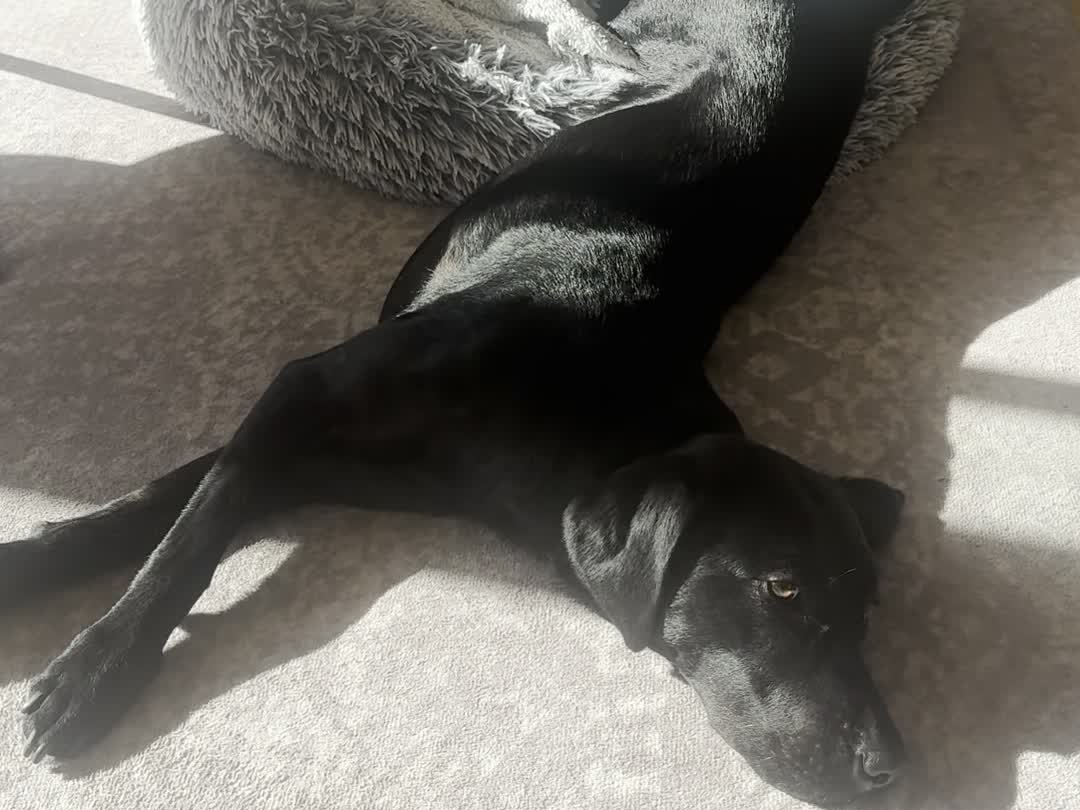
You think a good dog is a busy dog. What I want is a dog who is good at doing nothing. I say this about children too: I want your child to learn to be bored. A dog who can be bored is a dog you can take to a pub for five hours and nobody knows it is there. That dog was not born. That dog was taught, the same way a dog who won't settle was taught, by accident, that the day is one long treasure hunt.
Do the toy audit
Go to your dog's toy box and take out everything with a face. The plush duck, the smiling avocado, the octopus with the big eyes. Those are children's toys. A dog doesn't care if your toy has a face. The face is for you. Here is the test: put the toy box in front of a three-year-old. Whatever they reach for is a child's toy. The boring bit of rope they ignore? That one belongs to the dog.
And the rope tells you the real secret. The most boring toy is a dog toy, because it's not about the toy itself. It's about how you engage with your dog. A $2 rope in your hands, moving like a rabbit, beats every battery-operated squirrel in the shop. So don't buy anything from a pet shop. If you need anything, go to Bunnings. Then spend your money on training.
What actually tires a dog
Two things. Real PLAY with you, and brain work.
Real PLAY is one on one, you and the dog, a toy that behaves like prey, your full attention. Throwing a ball while you scroll your phone is not that. That's just lazy play. There's no difference to giving a child an iPad. The dog gets more revved, not more fulfilled, and repetition causes obsession, which is why the ball-mad dogs are never the calm ones. Ten minutes of proper play and my clients' dogs are flat on the ground. Not from running. From engaging.
Brain work is the dog processing the world and choosing well. Holding a settle while a skateboard goes past. Working out that the good decision at the front door is a still bottom. That is what tires a brain properly, and it is built through structured cycles, not through a mat.
The dog who had months of enrichment
A dog I met recently had been reactive for a long time, and everything thrown at it had been food. Snuffle mats filled daily. Food scattered on walks. Go find, go find, go find, every time another dog appeared. Months of it. The dog was still exploding at every dog it saw.
Because the dog was not hungry. The dog wanted to play. It was pulling toward other dogs for a game, and it kept being answered with kibble on the grass. You cannot pay off a play motive with food. The motive was never fulfilled, so the explosion never had a reason to stop. One session of real play with its owners and that dog lay down outside for the first time in its life. Not magic. Just the right need, finally met.
If you have a cupboard full of enrichment and a dog who still cannot settle, none of this was your fault. You did the best of what you knew, and what you knew was what the shelf told you. Now you know the shelf was wrong.
Start with the settle. My self-paced course Teach Your Dog to Switch Off is AU$49 and it teaches exactly this: how a dog learns to be bored, on purpose, anywhere. If the restlessness comes with reactivity, or the settle won't stick no matter what you do, that is what the consultation is for. Ninety minutes, $450, and we look at your dog's whole week, not just the toy box.
Common questions
Is a Kong bad for my dog?
No. A Kong in the crate is a snack for the nose, and a snack is fine. The problem starts when food puzzles become the plan for a dog who can't settle. If the Kong is the only thing standing between your dog and pacing the house, the Kong is not the fix, it's the painkiller.
How much sniffing and scavenging is okay?
Some, inside EXPLORE, on some days. Sniffing the nature strip on a walk is your dog being a dog and it costs nothing. What I take away is the daily treasure hunt in the house, because that is the part that teaches the dog the day never ends.
What should I buy instead of enrichment toys?
A plain rope from Bunnings, and your time. The toy only matters as much as the way you move it. Ten minutes of real one-on-one PLAY does more for a restless dog than a cupboard of puzzles, and a dog who has learnt to be bored needs nothing from the shop at all.