
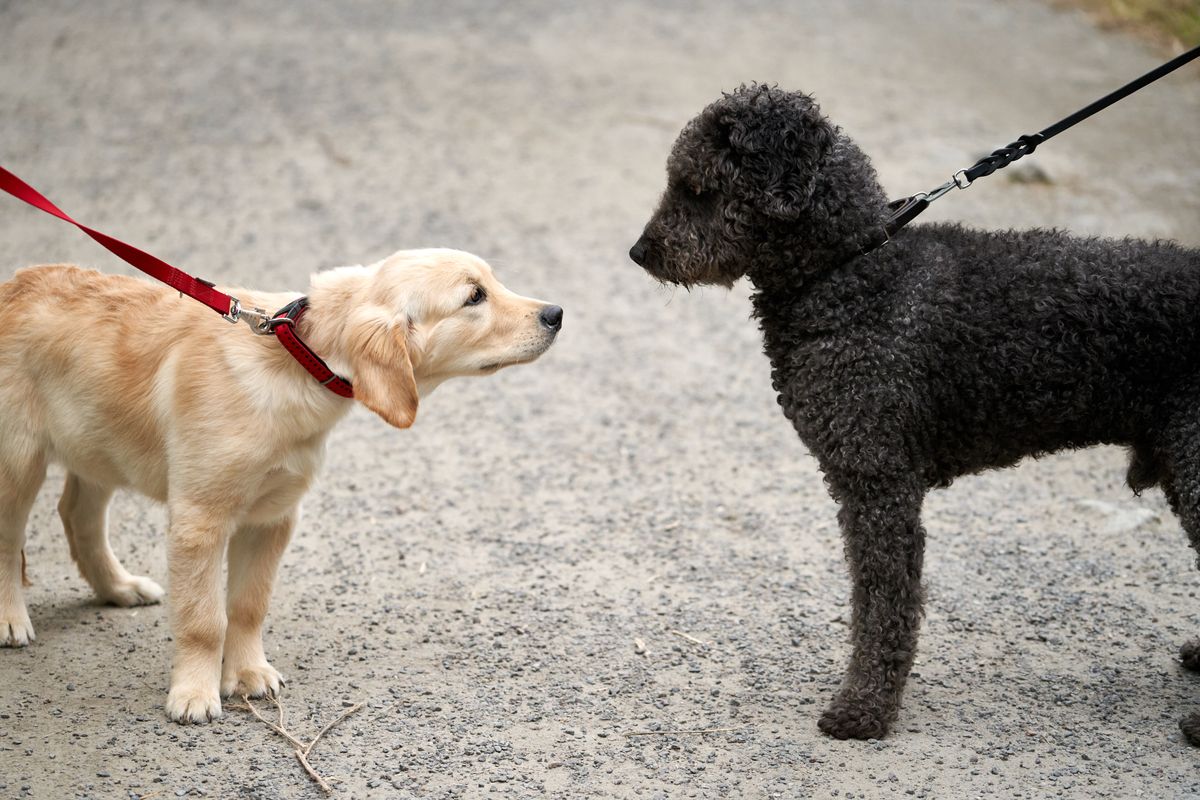
Your dog explodes at the second dog because holding it together at the first one filled the tank, and nobody emptied it. The energy from a hard choice does not evaporate. It sits in the body, waiting, and the next trigger gets all of it.
Owners read this as random. "He was fine with the labrador, then lost his mind at a tiny poodle." It is not random, and the poodle is not the problem. The labrador is.
Holding it together costs something
When your dog sees another dog and chooses not to react, that is not nothing. That is your dog working. Picture the meter running: the arousal climbed to 80, maybe 85, and the dog spent real effort keeping the lid on it. From the outside it looks like a non-event. On the inside, your dog just did the hardest thing you have ever asked of them.
Now the arousal is still in there. It needs to come out somewhere. If the next thing that appears is another dog, it comes out there, at double strength, and you get the explosion that "came from nowhere."
Adults do the same thing. You hold it together through a brutal meeting, stay professional, say all the right things. Then you get home and snap at whoever touches the dishwasher wrong. The dishwasher was never the problem.
The fix: release the energy on purpose
After your dog makes a hard choice to disengage, the energy needs a licensed exit before the next trigger finds it. That exit is a short burst of play with you. Ten, twenty seconds of real engagement, a tug, a food chase, your dog's game, graded by how hard the choice was. The harder they worked, the bigger the release.
This feels backwards to most owners. Their instinct after a calm pass is to keep everything calm, tiptoe onward, don't wake the dragon. But you are not rewarding excitement. You are draining it. The dog that gets a release after dog one meets dog two with an empty tank.
Two things this is not. It is not treats shoved at your dog while the trigger is still there, because a distracted dog is still a worried dog. And it is not the walk continuing as if nothing happened, because something did happen. Your dog paid for it.
Score the effort, not just the result
"In my session an eight or nine is a seven for you during the week."
While you are learning this, judge your dog by effort, not performance. A pass where your dog trembled with the work of it and just barely held on is worth more than an easy pass, even if it looked scrappier. Performance might be a five out of ten. Effort was a ten. Pay the effort.
And drop your expectations slightly when I am not standing next to you. What your dog does at an eight or nine in a session is a seven for you during the week. That is normal, not backsliding.
Early in training, dose the releases generously. A dog who has tried hard all walk and never gets an outlet will spend that budget eventually, and they will pick the moment, not you.
If this pattern sounds like your walks, the full system for bringing the whole baseline down is in The Reactive Dog Reset, self paced, $129. Or start with the free On-Edge Audit and find out where your dog actually sits.