
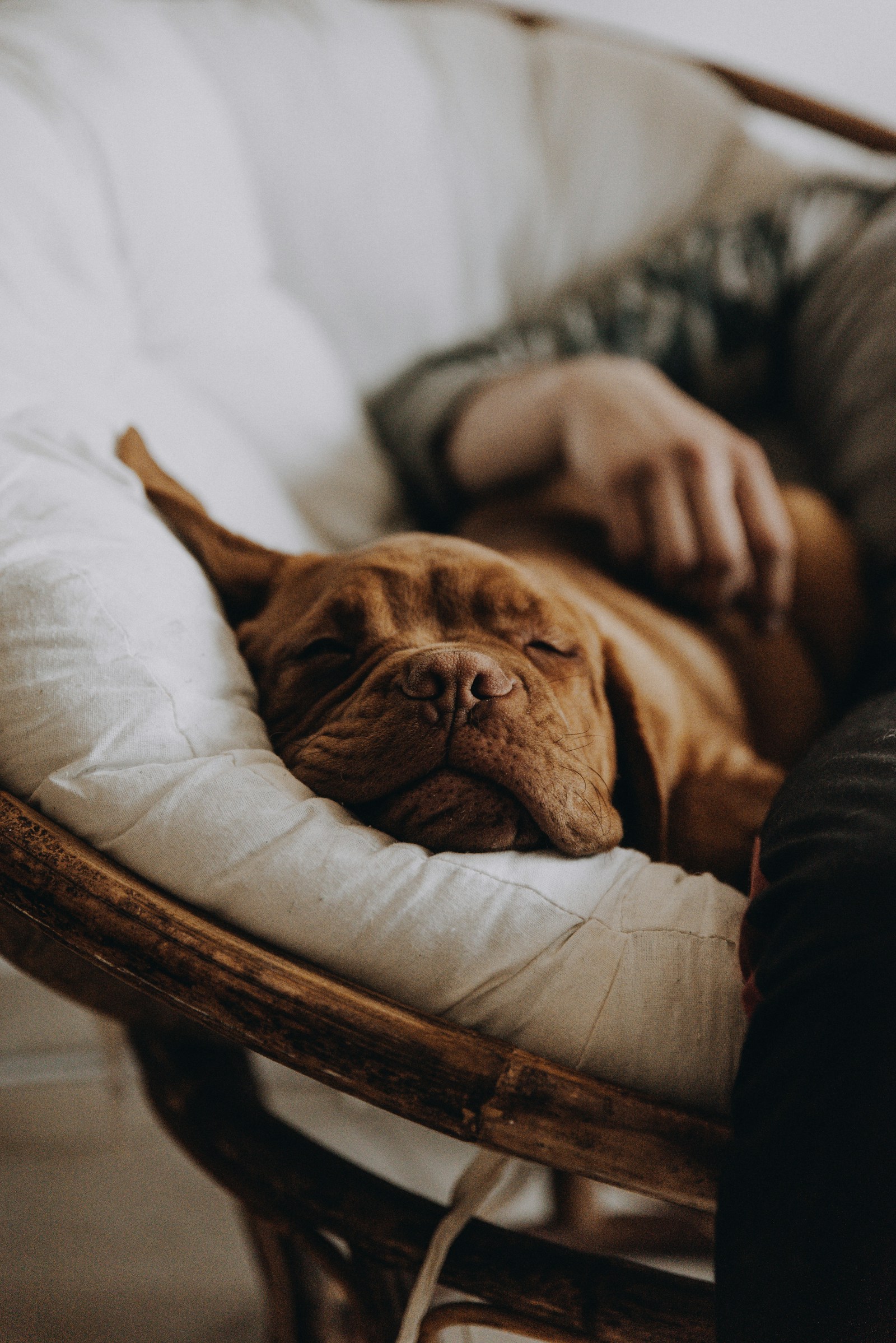
You calm a reactive dog's nervous system by lowering the baseline it lives at, not by reaching for a trick when it goes off. The three biggest levers are real rest, far more than most dogs get, fewer hours of free stimulation, and genuine decompression time at low arousal. A reactive dog with a calm nervous system did not get there in the moment. It got there over weeks of a routine that gave the system a chance to settle.
This is the piece owners skip, because it is less satisfying than a technique. Everyone wants the thing to say or do when the dog is mid-reaction. But a nervous system running hot all day cannot be talked down at the trigger. The calm is built in the quiet hours, and then it is available when you need it.
Sleep is the first lever, and the most missed
Most dogs sold to me as anxious or reactive are, underneath it, exhausted. A dog brain regulates closer to a toddler's than to an adult's, and a dog short on sleep runs irritable and over-reactive all day, exactly like an overtired child. Adult dogs need far more rest than households give them, much of it during the day, and a puppy needs the majority of every twenty-four hours asleep. Chronic sleep debt is the single most common reason a nervous system sits too high. Real rest, on your terms, in a crate or on a tether, is the foundation, and it does more in the first fortnight than any drill. This is CALM, and it is a skill the dog learns, not a mood you wait for.
Take back some freedom
A dog with the run of the house, a window to patrol, a couch to guard, and constant access to you is a dog with no off switch. Every one of those is low-grade stimulation keeping the system ticking over. Reducing free roaming is not punishment. It removes the steady drip of input that keeps the baseline up, and it gives the dog permission to switch off rather than stay on duty. Figgy the Moodle, who barked at sounds his owners could not hear, was a nervous system stuck on alert, and CALM was the lever that brought it down.
Decompress, do not stimulate
When owners want to help an anxious dog, the instinct is to do more: more walks, more enrichment, more training games. For a hot nervous system this often backfires, because it is all arousal. What the system actually needs is decompression: long stretches of low-key, undemanding time. Lying under your chair. Sniffing slowly in a quiet space. Being a dog with nothing asked of it. Low arousal is the rule. This is the part of the day that lets the baseline fall, and most reactive dogs are starved of it.
What about the 3-3-3 rule?
People often find this topic looking for the 3-3-3 rule, so it is worth placing. The 3-3-3 rule is a rough guide for a newly adopted dog: about three days to decompress, three weeks to learn the routine, three months to feel at home. It is a good reminder to give a new dog time and quiet rather than a parade of outings. But it is a settling-in guide, not a method, and it will not on its own lower an established reactive dog's baseline. The work above is what does that, whether the dog is new or has been with you for years.
And in the actual moment?
When the reaction does come, the way to calm the system is, counter-intuitively, to add nothing. Keep the dog safe, stay quiet and still, and let the arousal crest and fall. Talking, patting, and treating mid-reaction feed the state you are trying to bring down. The detail is in what to do when your dog lunges and barks. The moment is not where you build calm. It is where you find out how much calm you have already built.
How the pieces fit
Sleep, less freedom, and decompression lower the daily baseline. The four modes hold it there over time. Reading your dog tells you when it is climbing so you can act early. None of it is a single technique, which is the honest reason there is no one trick to calm a reactive dog. There is a way of living with the dog that leaves its nervous system room to settle, and that is the whole of how to stop a reactive dog. If you want a structured way to track your dog's rest and arousal day by day, the Waterline Workbook is built for exactly that.
Common questions
How do I calm my reactive dog's nervous system?
Lower the baseline, not the moment. Real rest, less free stimulation, and decompression time do most of the work over weeks.
How do I calm a reactive dog in the moment?
Add nothing. Keep the dog safe, stay quiet and still, and let the arousal pass. Soothing during a reaction feeds it.
Does the 3-3-3 rule calm a reactive dog?
It helps a newly adopted dog settle by giving it time and quiet, but it is a settling-in guide, not a method for lowering an established reactive dog's baseline.