
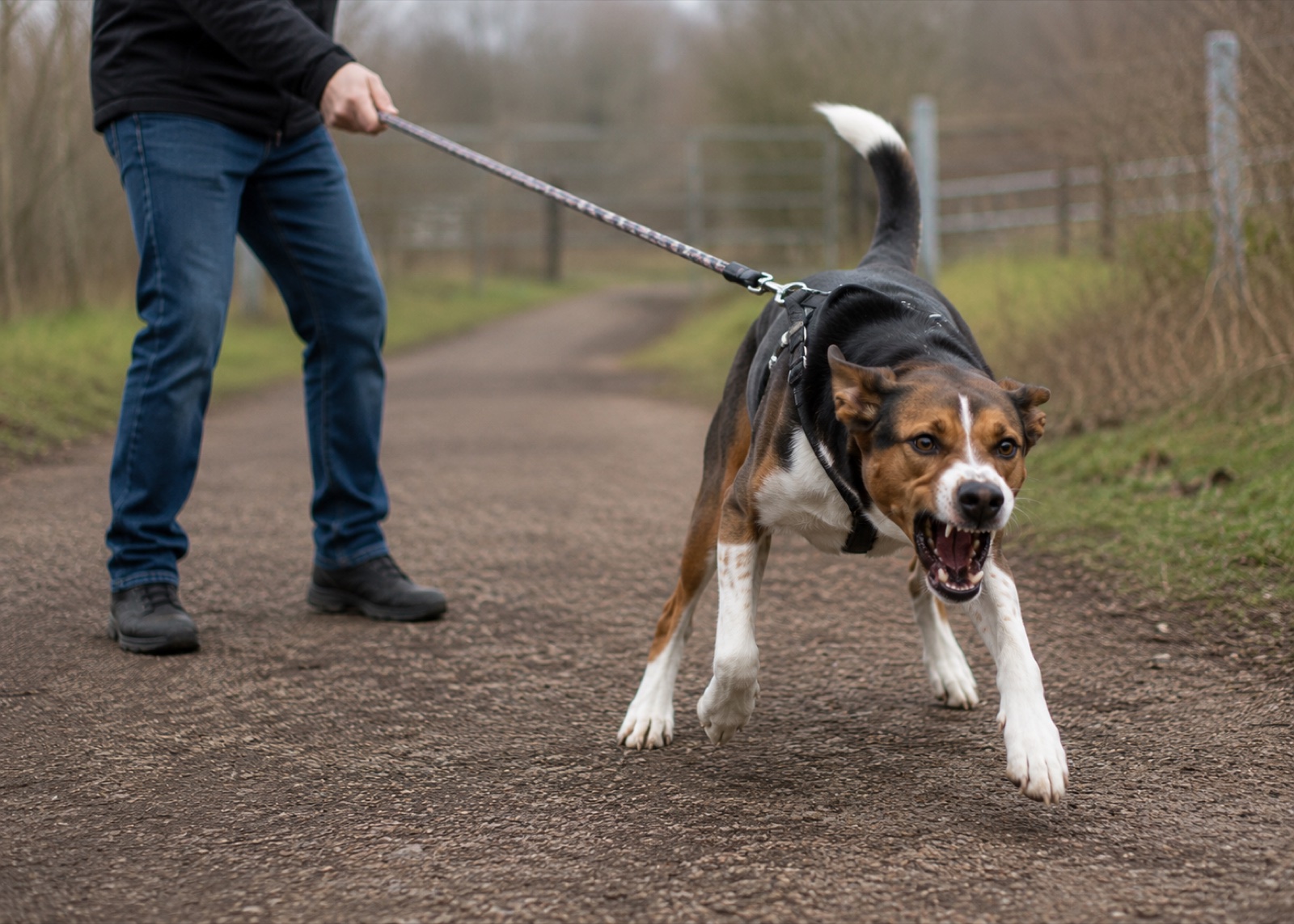
Reactive dogs aren't unpredictable. That's the first thing I tell owners. Max is a harrier hound who lunges at dogs and people he sees on walks. Chris and Jess, his owners, described it as "zero to one hundred in half a second." He's a big, strong dog, and when he goes, he goes. But Max wasn't random. He was operating exactly as his arousal level predicted. The problem was that Chris and Jess couldn't read it yet. By the time the lunge happened, they'd already missed several signals telling them it was coming.
The image I use to explain this is the waterline. It sits at the core of the Still Waters methodology alongside the PACE framework. Once you can picture a dog's arousal as water level rather than a fixed temperament, a reactive dog stops looking like a personality problem and starts looking like a regulation problem. Those are very different things to solve.
What the waterline is
Every dog has a baseline level of arousal. Picture a body of water. Some dogs live at high tide: they're wound up most of the time, and a small trigger tips them over. Some live at low tide: calm most of the day, and it takes a lot to move them. Most dogs sit somewhere between, depending on how the day has gone.
Triggers push the waterline up. A dog appearing around a corner. A cyclist. A knock at the door. Whether the dog reacts depends almost entirely on where the waterline was sitting before the trigger arrived, not on the trigger itself.
This is why Max would walk past six dogs without incident and then lunge at the seventh. Chris and Jess often assumed the seventh dog had done something different. Too close, too fast, wrong breed. Sometimes. But usually Max had just climbed through the morning and the waterline was already close to the top when the seventh dog appeared. The seventh dog wasn't the problem. The height of the water was.
The first trigger of a walk doesn't just cause a reaction. It raises the waterline for everything that comes after. A dog who sees a reactive dog in the first thirty seconds of a walk will sit higher for the rest of that cycle. The trigger passes. The elevated state stays.
High tide, low tide, and what moves the water
Where a dog's waterline sits right now is the result of hours and days, not just the last few minutes. Baseline builds slowly and drops slowly.
The biggest driver I see is lack of genuine rest. Not resting-near-you-while-the-house-runs-around-them rest. Actual off-time in a crate or on a tether with no demands on their attention. Without this, the water doesn't drop. A dog in a household with constant low-grade stimulation (door action, kids, windows they can patrol, noise) stays at mid-tide for most of the day without the owner realising it. By afternoon, they're already close to the top before the first trigger arrives.
The walk itself raises the waterline if it's pitched above what the dog is ready for. Most owners assume a reactive dog needs more exercise to burn off the arousal. The reverse is usually true. A walk that takes the dog past four triggers raises the waterline by the time you're home. The next walk starts higher. Over a week, the baseline climbs.
Handler state is the one owners find hardest to hear. Rex was a cavoodle in Richmond who would go hard at visitors. His owners knew someone was coming and were tense about it well before the knock. Rex read that and arrived at the front door already wound up. The visitor hadn't even rung the bell. The handler's waterline had filled the room before the trigger arrived.
Pain raises baseline fast, and dogs who hide discomfort can look like a training problem for months before anyone checks. If reactivity has come on suddenly in a dog with no prior history, a vet assessment belongs before any training program starts.
What you see before the reaction
The lunge, the bark, the snap. These are the last things that happen in a sequence. By the time the behaviour is visible, the dog has been communicating for seconds, sometimes longer. The reaction is the waterline breaking the surface. The climb was already underway.
What the climb looks like in a dog: ears tracking forward and not releasing, weight loading onto the front feet, eyes fixing and hardening, mouth closing after a dog who usually pants, tail height rising and stiffening. These aren't signs of alertness. They're the water coming up.
Max was large enough that Chris and Jess could feel the tension come down the lead before the lunge. Once they knew what they were looking for, they started catching it two or three seconds earlier each time. That gap is the whole game. Two seconds early is a redirect. On the lunge, you're managing a harrier hound at full pull.
If your dog is living at high tide, the first session is mostly reading the waterline with you, in real time.
Enquire about private training →Reading the drop
Reading the waterline coming up is one skill. Reading it coming down is the one owners miss most, and it matters because the window for resuming PLAY or moving on closes fast.
The signals: ears low or relaxed rather than tracking, eyes soft rather than locked, weight back rather than loaded forward, a look away from the trigger, a slow blink, a shake. Any of these is the water dropping. You say "ready" and see if the dog snaps into engagement. If it does, you play. If it doesn't, you say "finish" and wait for the next signal.
The timing rule with any correction is the same: use it when the dog is escalating or escalated. Not after the dog has already come back down. If the dog has de-escalated and you intervene, you've just punished the thing you actually wanted. The de-escalation stops happening.
Why the same trigger produces different reactions
Owners spend a lot of time trying to figure out what it was about a specific dog or person that caused the reaction. Sometimes there is something specific: the right height, the wrong energy, too fast. More often the variable isn't the trigger. It's the waterline the dog brought to it.
Chris and Jess noticed Max was worse on afternoon walks. The morning walk started lower. By afternoon the waterline had climbed with everything the day had added. Same street, same dogs, different dog.
They also noticed that a shorter, quieter route after a bad moment would help him reset faster. That's the right read. When the waterline is already high, the job isn't to push through. It's to reduce the total load so the session ends lower than it started.
What actually brings the waterline down
Most training programs are thin on this part. They address what happens at the reaction. The waterline is what needs to change.
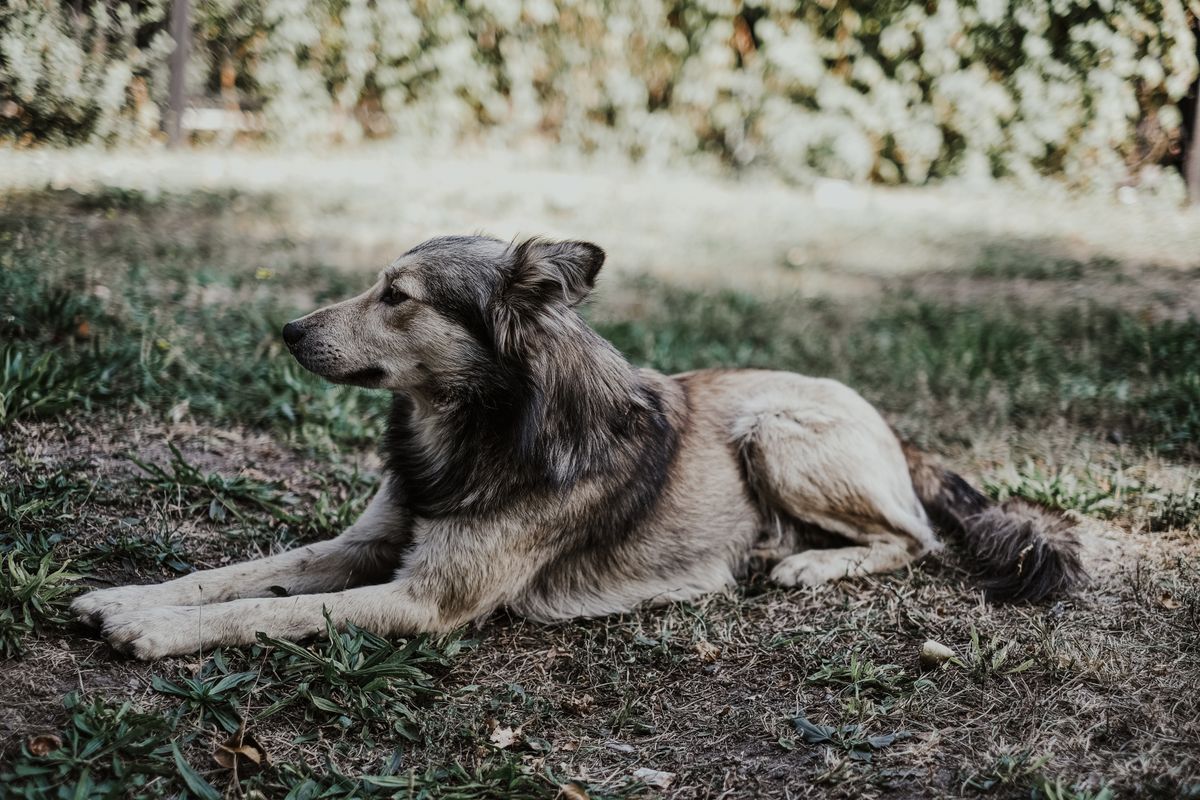
Genuine rest as a non-negotiable part of the day is a big piece of it. Structured rest in a crate or on a tether, on your terms, for real blocks of time. Not rest near you. But rest on its own isn't the lever. Balance across the whole day is what brings the water down. Real engagement with you in PLAY, brain work in ANCHOR, genuine downtime in EXPLORE, and proper rest in CALM, none of them crowding out the others. When the day is balanced like that, the dog's nervous system gets actual recovery time. The baseline falls, sometimes within a week, and triggers that used to hit the top now hit the middle.
Shorter, structured cycles replace long walks for the first stretch of reactive dog work. Three or four cycles across a day, each with a clear sequence and a clear end point. The dog's brain gets engagement and then gets rest. Over time, the baseline stays lower, and the gap before reaction gets wider. See cycles, not walks for the full structure.
The third piece is handling that doesn't feed the state. A dog whose waterline is rising feeds off handler attention: a tightening lead, eye contact, cooing, repeating a command, asking the dog to sit while it's already mid-lunge. All of it adds more water. The handler's job in that moment is to hold structure and not contribute heat.
What changes
Three weeks into working with Max, Chris and Jess sent a message I get some version of regularly. He walked past two dogs on the same block where he'd lunged at a single dog the week before. The waterline had dropped enough that the trigger didn't reach the surface.
That's the shift. Not no triggers. Not no reactions ever. The same trigger that used to cause an eruption now produces a glance and a return to attention. The handler reads the glance, says "ready," and the game resumes. Faster recovery. Bigger gap before the top. A dog you can take somewhere without both of you surviving it.
If you want to start putting this into practice on your own dog, the Waterline Workbook walks you through reading and lowering your dog's baseline step by step. And if you want me to do it with you, the private training work starts here. The first session is mostly reading your dog's waterline in real time. Once you can do that, the rest of the work is much harder to get wrong.