
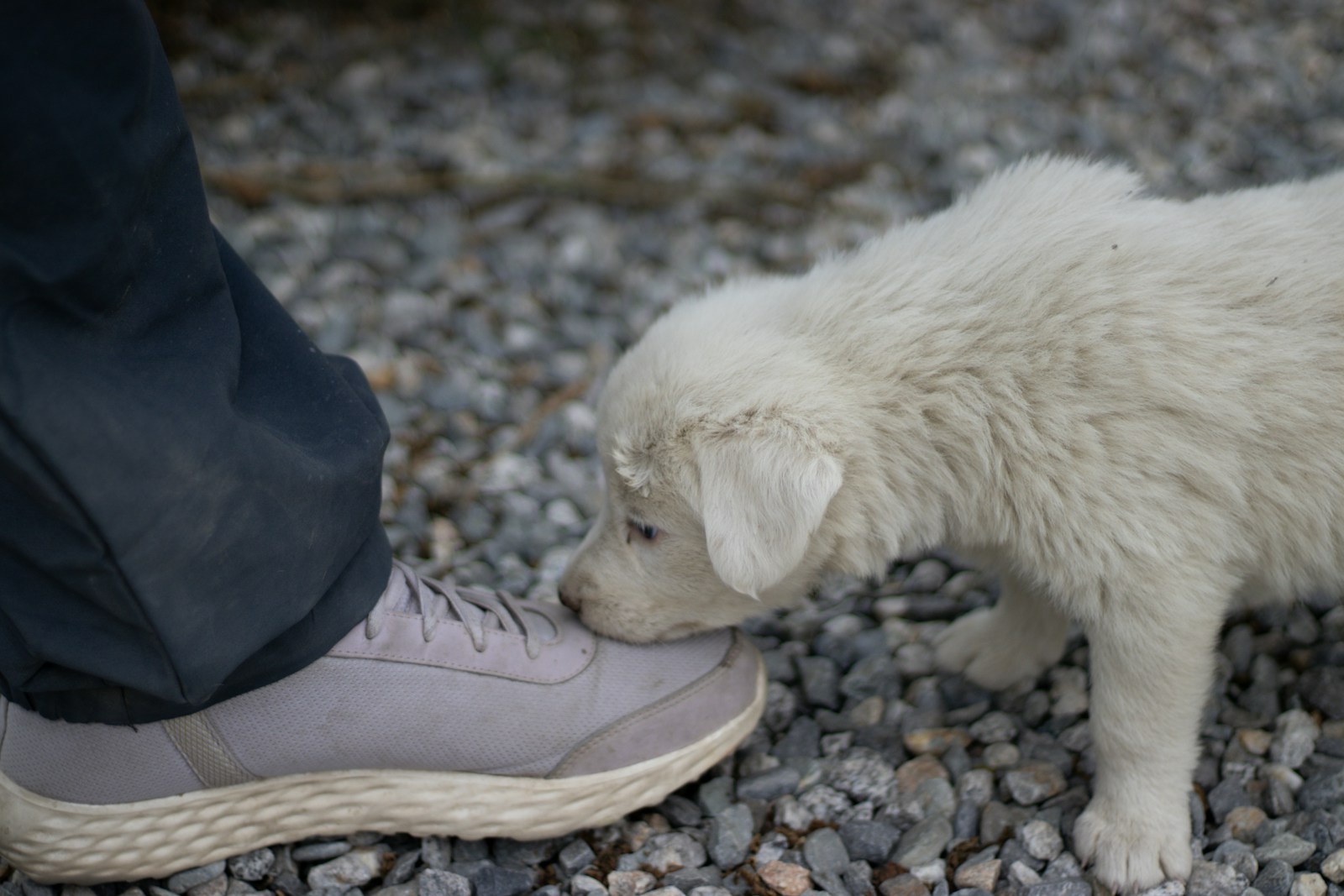
Puppy socialisation is about the world, not other dogs. Noises, surfaces, traffic, weather, strollers, umbrellas, people in hats: that is the curriculum. Dogs are one line on it, not the whole subject, and the families who treat playdates as the entire syllabus are usually the ones ringing me at eight months.
The word is the problem. "Socialising" sounds like a calendar of dog friends, so new owners head to the dog park to rack up meetings. What the puppy actually learns there is that other dogs are the most exciting thing in existence and that humans exist to transport you between them. Congratulations, you have built a dog who screams at every dog on every walk. Not because they were undersocialised. Because they were socialised into obsession.
What the window is actually for
In the first weeks, your puppy's brain is a sponge. The job is to show it as much of the world as possible while everything still soaks in easily: the garbage truck, wet grass, slippery floors, the vet's scale, kids on scooters, thunder, the hairdryer. Every experience grows the sponge, and a bigger sponge means your adult dog takes new things in its stride, including things it never saw as a puppy.
That is the whole trick. Socialisation is not a list of things to tick off. It is teaching the brain that new things are usually fine. A puppy who has met forty dogs and no umbrellas is not socialised. They are specialised.
And exposure is not flooding. Watching the garbage truck from across the road while the world stays boring is exposure. Being carried into the middle of a festival at nine weeks is a bad day out. You want your puppy taking notes, not surviving.
The dogs that do make the list
Your puppy should absolutely meet dogs. Calm ones. Ones you have vetted. The way you would check a playground is safe before letting a child in, you check the dog: do I know this dog, is it steady, does it read puppies well and correct them fairly?
One good older dog teaches your puppy more in ten minutes than a dog park teaches in a month, because the lesson is the right one: dogs are fine, dogs have rules, and not every dog is a party. The strange dog at the park teaches the opposite, and the rude one can install a fear that takes me a full program to untangle later.
Same rule for people. Calm people, not every person. Your puppy does not need thirty strangers squealing at it. That teaches puppies that humans arriving means arousal spiking, and you will meet that lesson again every time your doorbell rings for the next decade.
The quiet goal underneath
"A puppy who has met forty dogs and no umbrellas is not socialised. They are specialised."
Here is what nobody tells new puppy owners: the end goal of socialisation is a dog who can be near the world without needing a piece of it. Watch the dog walk past. Hear the skateboard. See the toddler. And stay with you, because the world is interesting but you are home base.
That dog is built in these weeks, on purpose. It is the whole architecture of my Online Puppy Program, which starts at five weeks old, before your puppy even comes home. Nine weeks, two video catch-ups, $440, anywhere. Spring puppies are arriving soon. Build the sponge while it is still growing.