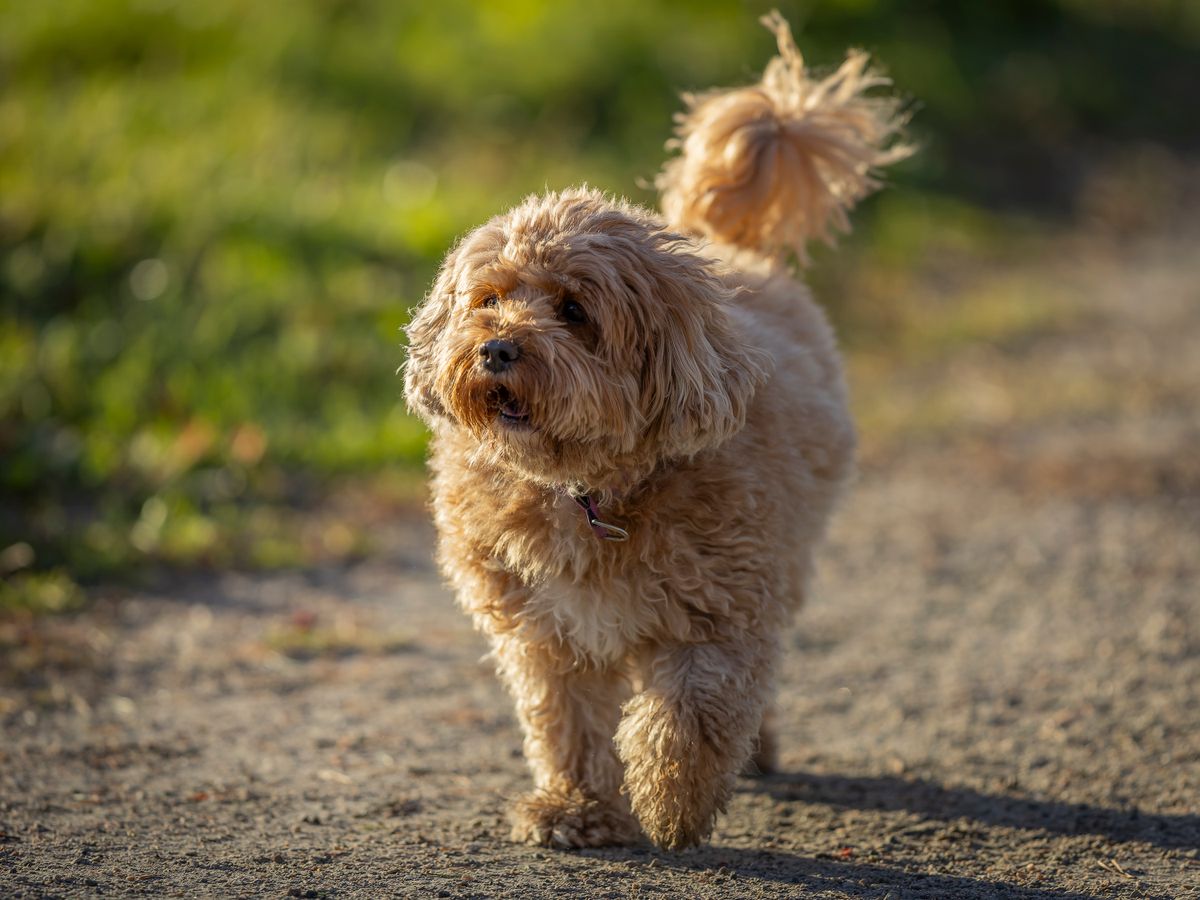
Training a Cavoodle means giving a clever, deeply attached little dog the structure and off-switch a bigger dog would get, because most of its problems come from being carried, fussed, and treated like a toy rather than a real dog. The Cavoodle is the dog of the moment, and most weeks one is sitting in front of me. They are lovely: clever, affectionate, the right size for an apartment, and they melt people on sight. They also turn up with a very consistent set of problems, and almost none of them are the dog's fault. A Cavoodle is a real dog with real needs wearing a coat that makes everyone treat it like a toy.
Two parents, two sets of needs
A Cavoodle is a Cavalier King Charles Spaniel crossed with a Poodle, and it tends to inherit the headline traits of both. From the Cavalier comes a dog that wants to be on you, all the time, bred for centuries to be a companion and genuinely unhappy left alone. From the Poodle comes real intelligence and more energy than the fluffy look suggests. Put those together and you have a smart, busy, deeply attached little dog. Lovely company, and primed for separation anxiety and demand behaviours if nobody plans for it.
The small-dog trap
The single biggest thing I undo with Cavoodle owners is not something the dog learned. It is what the humans allowed because the dog is small and adorable. A Cavoodle gets carried instead of walked, picked up instead of taught, fussed every time it asks, and allowed to do things no one would tolerate from a Labrador. The dog is not being spoiled in a moral sense. It is being denied the structure it needs, and a small dog with no structure is just as lost as a big one, it is simply easier to scoop up and ignore the problem.
Because the Poodle half learns fast, a Cavoodle picks up the habits you accidentally teach it just as quickly as the ones you mean to. Demand barking that gets answered becomes a strategy. Whining that gets a cuddle becomes a tool. Being lifted onto the lap whenever the dog frets teaches the dog that fretting works. None of it is naughtiness. It is a clever dog learning exactly what its environment rewards.
Separation, barking and the off-switch
The complaints I hear most about Cavoodles, that the dog cannot be left alone, barks for attention, and struggles to settle, are really one problem wearing three hats. The dog has never learned to be calm and separate, on its own terms. CALM is where that gets built: the dog learning that demanding gets nothing and that it can switch off even when you are right there, then extending that to being switched off when you step away. A Cavoodle that can settle alone in the room with you is well on the way to settling alone in the house. One that has only ever been soothed on a lap has not had the chance to learn it.
Underneath the coat, a Cavoodle is harder to read than a short-haired dog, which is part of why the worry gets missed until it is barking. The body language is still there, in the tail base, the weight, the way it holds itself, you just have to look past the fluff to find it. The full picture is in the post on reading body language.
What a Cavoodle actually needs
The same things a big dog needs, scaled down, not skipped. Real structure and boundaries. A taught off-switch and the ability to be calmly alone, started early before separation hardens. An outlet for a smarter, busier brain than the look suggests, through PLAY and ANCHOR. And an owner willing to put the dog down and let it be a dog, on the ground, making its own good decisions, rather than managing every moment from their arms. Do that and the Cavoodle is everything people hope for. Skip it and you get a clever, anxious little dog that has learned the world revolves around it.
If your Cavoodle cannot be left, or the barking and demanding have taken over, the private training program starts with the off-switch and being calmly alone. I work across Newport, Williamstown, Docklands and Melbourne's inner west, with online support between sessions.